A drawer full of gadgets doesn’t necessarily make cooking easier. A few tools that solve problems you keep running into can be much more useful.
These seven ideas cover ordinary kitchen frustrations: awkward pouring, messy cupboards, leftovers you forget about and utensils that struggle with the job.
Want the quick version? Start with the problem that happens most often in your kitchen. You don’t need everything on this list.
| If your problem is… | Start with… |
|---|---|
| Recipes are difficult to repeat | A digital kitchen scale |
| Food is awkward to lift | A thin fish slice |
| Leftovers get lost | Stackable containers |
| Cupboards are difficult to use | An adjustable organiser |
1. A digital kitchen scale for recipes with fewer guesses
Measuring flour by eye or squeezing everything into a measuring jug makes it harder to repeat a recipe. A digital scale lets you weigh ingredients directly into a bowl. A tare button resets the reading between additions, so you can keep using the same container.
Look for: A clear display, an easy-to-clean surface and a capacity suitable for your bowl plus ingredients.
Skip it if: You already have a reliable scale that does the job.
2. A thin fish slice for food that’s difficult to lift
A thick spatula can struggle to get under a fried egg or a delicate piece of fish. A thin fish slice gives you a flatter edge to work with. Choose a material that is compatible with your pans: metal may suit uncoated stainless steel, while coated cookware needs utensils approved by its manufacturer.
Look for: A comfortable handle and an edge that feels smooth rather than sharp or rough.
Skip it if: Your current turner already slides underneath food comfortably.
3. Stackable containers for a fridge you can actually organise
Leftovers are easier to forget when they disappear behind mismatched tubs. A set of containers with compatible shapes can make it easier to stack portions and see what you have.
Look for: Sizes you’ll use, lids that are easy to handle and clear information about freezer, microwave and dishwasher suitability.
Skip it if: You already have enough matching containers. Replacing them just for appearance won’t solve much.
4. Silicone-tipped tongs for turning and serving
Tongs are useful when a spoon or spatula feels awkward: turning vegetables, lifting food from a tray or serving portions.
Look for: A manageable length, a comfortable grip and a stated heat limit appropriate for the intended use.
Skip it if: You rarely cook foods that need gripping or turning individually.
5. A measuring jug you can read while pouring
If you keep lifting a jug to eye level, the markings may be making a simple task unnecessarily fiddly.
Look for: Clear graduations, a comfortable handle and a spout that gives you control. Some designs let you read the measurement from above.
Skip it if: Your existing jug pours cleanly and is easy to read.
6. An adjustable organiser for crowded cupboards
Pans, lids and chopping boards are difficult to reach when they’re buried in a stack. An organiser can give frequently used items their own space.
Look for: Dimensions that fit your cupboard, adjustable spacing and a weight rating suitable for what you intend to store.
Skip it if: Decluttering a few unused items would solve the problem first.
7. A removable sink strainer for food scraps
A strainer can catch scraps before they disappear down the plughole.
Look for: The right fit for your drain opening and a design you can lift out and empty easily.
Skip it if: Your sink already has an effective removable basket strainer.
Which one is worth buying first?
Choose the tool that fixes a repeated annoyance.
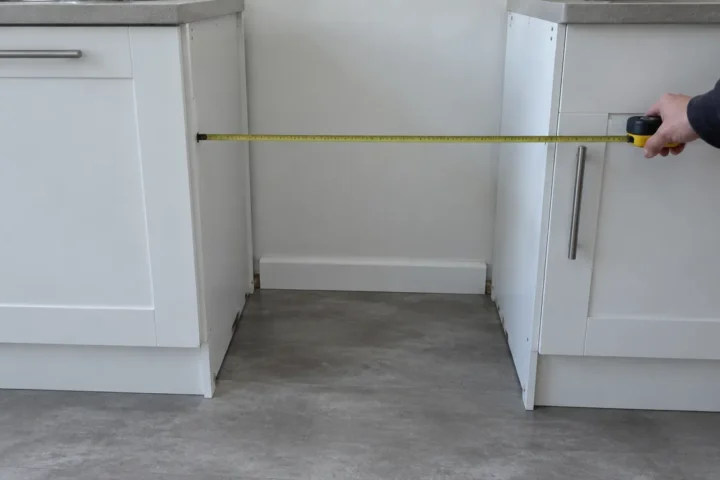
If you bake, start with the scale. If cupboard access is the problem, measure up for an organiser. If leftovers regularly get lost, look at your container setup.
One useful purchase is enough. The aim is to make your kitchen easier to use.
For more help choosing a turner for your pan, read why food sticks to stainless steel. For food storage habits, see where food should live in a UK fridge.
Our links go to example products on Amazon UK, where you can also compare similar options. This is a guide to tool types, not a hands-on test or ranking of individual brands. Check dimensions, materials and care instructions before buying.
Header image: AI-generated illustration of generic kitchen tools; product designs vary.