Our pick
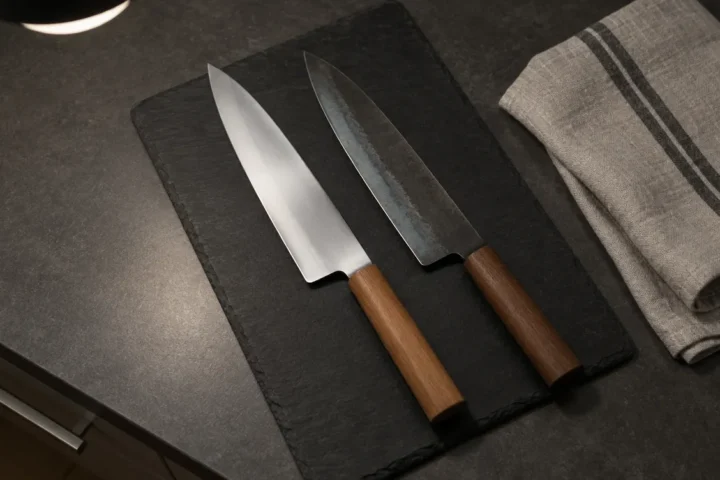
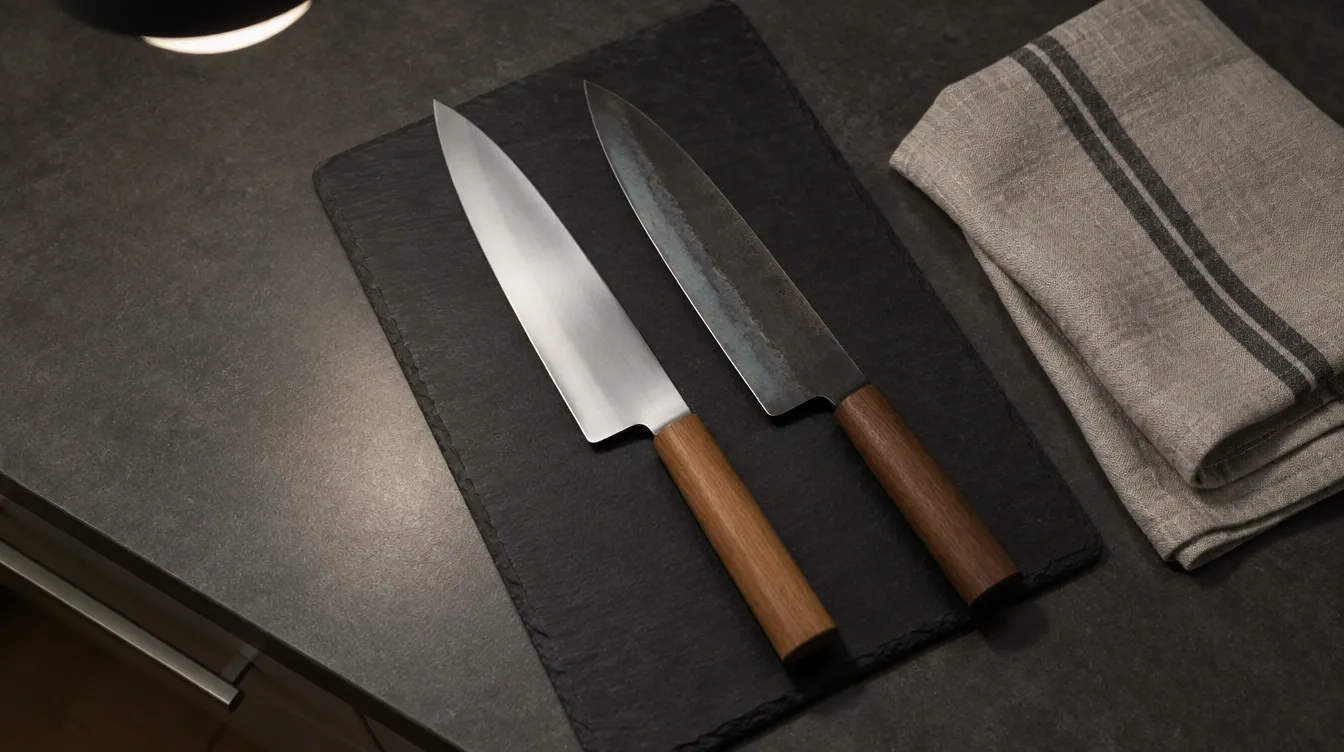
MasterClass chef’s knife with EdgeKeeper sheath (20cm)
Why we picked it
- A stainless blade, so it copes with a busy, damp kitchen and the odd lapse in care
- The listing says it comes with a sheath that has a sharpener built in
- 20cm suits most everyday prep
Worth knowing
- A sheath sharpener is handy, but it’s no substitute for proper honing and sharpening
- Balance is personal, so check reviews for comments on weight and handle
Paid link
Knife steel is where kitchen conversation gets heated. There are letters, numbers, strong opinions, and a lot of confident claims that don’t agree with each other. You don’t need most of it. A few ideas will carry you a long way.
What the steel actually is
All kitchen knife steel is iron with carbon in it. What separates the two families is chromium. Stainless steel contains at least about 10.5% chromium, which resists rust. Carbon steel doesn’t contain enough to be stainless, so it can rust if it’s left wet, and it darkens into a patina as it ages.
Stainless and carbon compared
| Stainless | Carbon steel | |
|---|---|---|
| Rust | Resists rust and most staining | Can rust. Darkens into a patina |
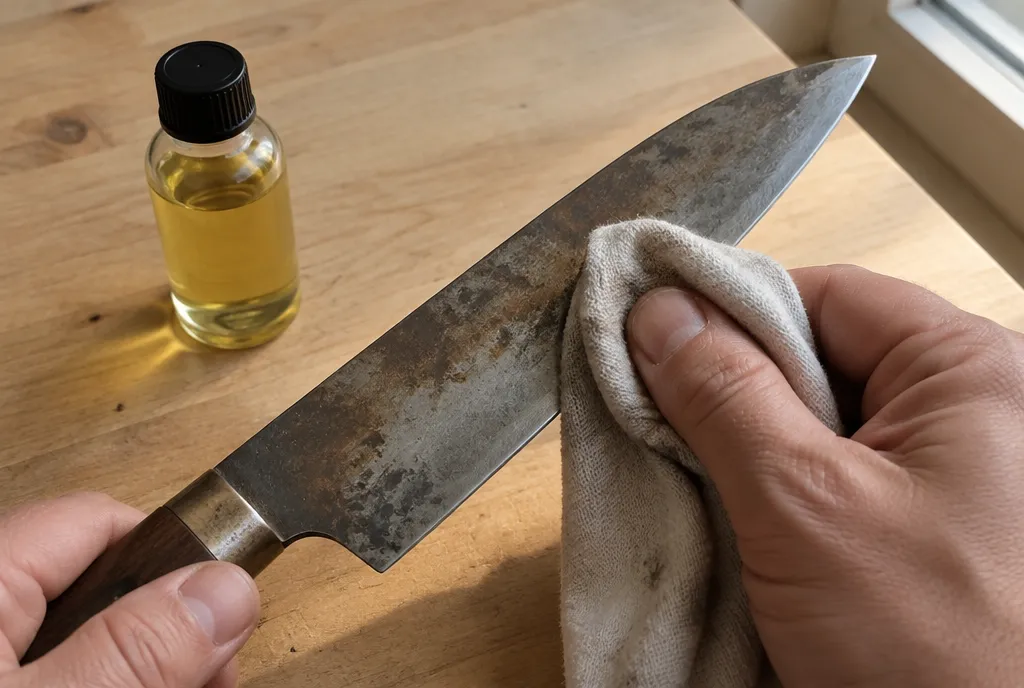
| Everyday care | Wash by hand and dry | Dry straight away. Wipe with a little oil if it won’t be used for a while |
| Sharpening | Varies with the steel | Often sharpens easily, says Herder |
| Edge retention | Varies with hardness and heat treatment | Varies with hardness and heat treatment |
| Chipping | Harder blades can chip if twisted | Harder blades can chip if twisted |
| Suits | Busy kitchens, low maintenance | People who don’t mind the upkeep |
Hardness, in plain words
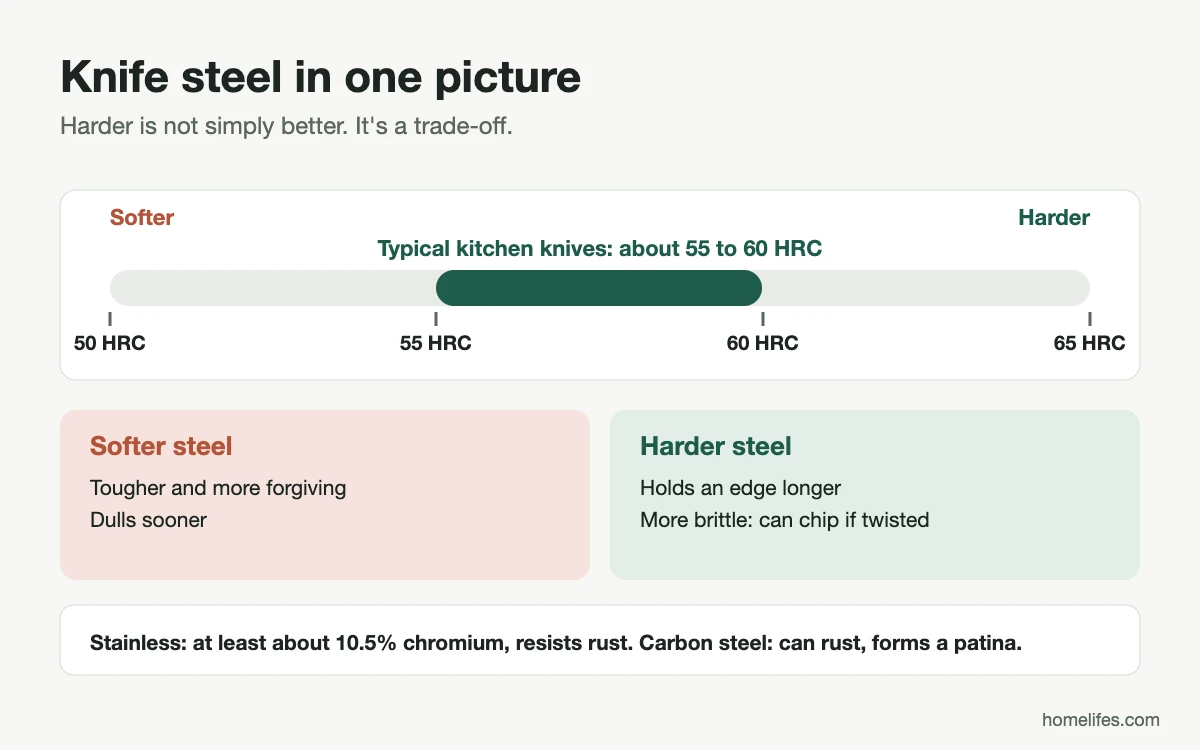
Makers describe hardness on the Rockwell scale, shown as HRC. Harder steel holds its edge longer but can be more brittle. Softer steel is tougher and more forgiving, but dulls sooner. Herder, a German knife maker, says most kitchen knives sit in a balanced range of roughly 55 to 60 HRC.
The claim that isn’t settled
You’ll often read that carbon steel holds an edge longer than stainless. It isn’t that simple. One US retailer, Cutlery and More, points out that was truer decades ago when most stainless steel was softer, and says a well heat-treated stainless blade can hold its edge slightly longer than carbon steel at the same hardness. Other makers and sellers say the opposite. The honest summary is that hardness, heat treatment, blade thickness and the angle of the edge matter as much as the label.
What the labels mean
- High-carbon stainless: stainless steel with enough carbon to harden well. It’s very common in kitchen knives.
- Damascus: several layers of steel combined, as Herder describes it. The layering tells you how it was made, not how good the blade is.
- German and Japanese style: a broad guide to shape and hardness. Japanese-style knives are often thinner and harder, and European-style knives tougher, but there are many exceptions. See santoku vs chef’s knife for how that affects cutting.
Reading a knife listing
- Steel name or type. A named steel and a stated hardness tell you more than words like “professional” or “razor sharp”.
- Full tang. A blade that continues into the handle tends to be better balanced and sturdier.
- Blade thickness and edge angle. A thinner blade with a finer edge cuts more easily, but it’s more delicate.
- Care instructions. If it says hand-wash only, believe it.
Which should you buy?
- You want low fuss: stainless. It copes with a damp kitchen and the occasional night in the sink, though we still advise hand-washing.
- You enjoy the care and love a keen edge: carbon steel is worth a try, if you’ll dry it every time.
- You’re buying on a budget: don’t assume stainless means soft. Some retailers argue cheap stainless is often low in hardness, so read reviews on how long edges last.
Caring for carbon steel
- Wash by hand and dry straight away.
- Don’t leave it wet, or in contact with acidic food, for long.
- Wipe a thin film of food-safe oil on it if it will be stored for a while.
- Keep it out of the dishwasher. Our guide to sharpening at home covers honing and sharpening for any steel.
If a carbon steel knife rusts
- Don’t panic. Light surface rust is common, especially after a damp night.
- Scrub the spots with a non-abrasive pad and a little bicarbonate of soda and water, then rinse.
- Dry the blade completely.
- Wipe on a thin film of food-safe oil, and keep it dry from then on.
Knives and care to consider
A stainless classic
Victorinox Swiss Classic chef’s knife (18cm)
Good for: an everyday stainless knife from a maker known for practical tools.
Not ideal if: you want to try carbon steel. Look at specialist makers for that.
Paid link
Keeping the edge
Victorinox sharpening steel (23cm)
Good for: a few strokes before cooking to keep any edge straight.
Not ideal if: the knife is already properly dull. Hone after sharpening, not instead of it.
Paid link
Knife steel: common questions
Does stainless mean it can't stain or rust?
It resists both far better than carbon steel, but it isn’t immune. Leaving a stainless knife wet for a long time can still mark it.
Can I put stainless knives in the dishwasher?
It’s best not to. Detergent, heat and knocking against other items can dull and damage the edge and handle.