Our pick
Tala Performance baking tray
Why we picked it
- Heavier, professional-gauge carbon steel that resists twisting
- Rolled edges add stiffness
- Non-stick coating for easy release
Worth knowing
- Use silicone or wooden tools to protect the coating
- Hand-washing keeps the non-stick going longer
Paid link
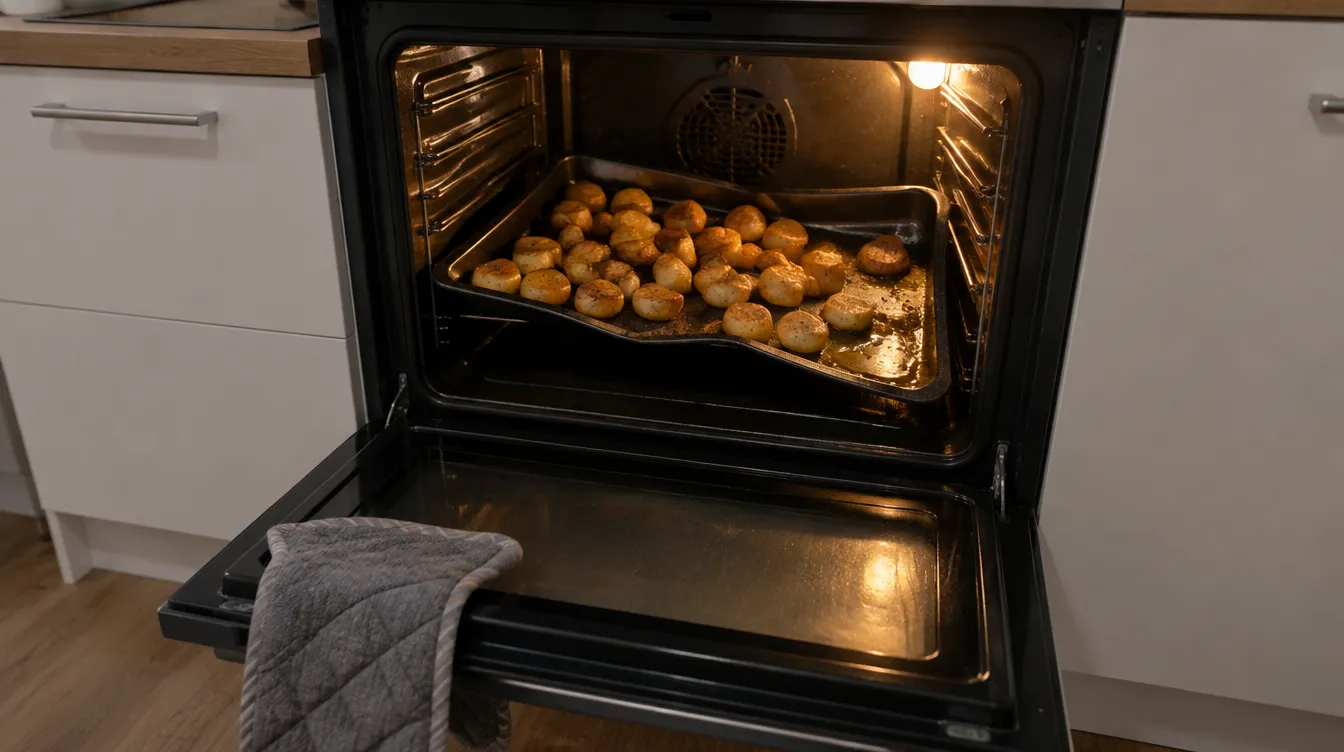
Halfway through roasting there’s a loud metallic ping from the oven. You open the door and the tray has twisted into a shallow propeller, with oil running to one corner and the potatoes sliding after it.
It happens to almost everyone, and it’s rarely a sign the tray is broken. It’s physics, and it’s mostly avoidable.
Why trays warp
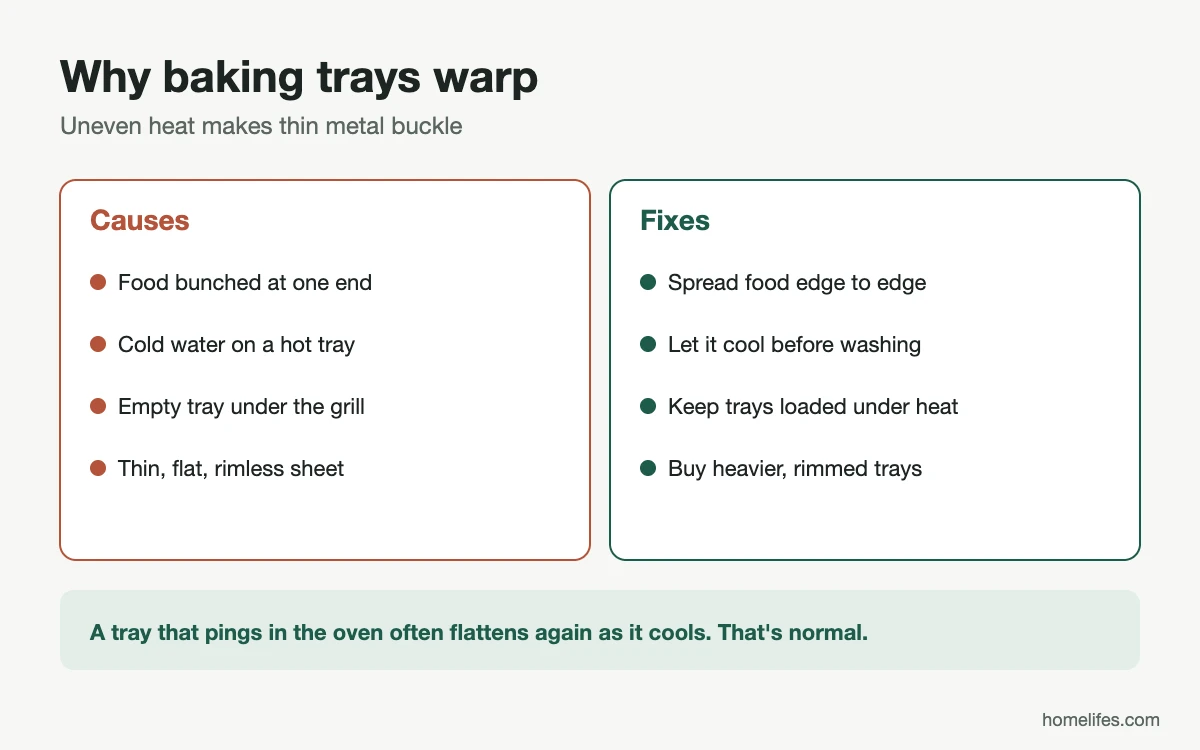
Metal expands as it heats. If one part of a tray gets much hotter than another, that part expands faster, and a thin sheet has nothing to resist the stress, so it buckles. The usual triggers are uneven: a few potatoes clustered at one end, a tray partly under a hot element, or a hot tray plunged into cold water.
Why some flatten again
Many trays that pop in the oven settle back almost flat as they cool, because the temperature evens out across the metal. That’s normal. A tray that stays bent after cooling has been stressed too far, often by cold water on hot metal, and is unlikely to recover fully.
Five habits that stop it
- Spread food across the whole tray, not just one end.
- Never run cold water over a hot tray. Let it cool on the hob or a heatproof board first.
- Avoid heating an empty tray under a hot grill.
- Use the right size for the job. A huge tray with a little food on it heats unevenly.
- Buy heavier. Thicker steel with a rolled or rimmed edge resists twisting far better than a thin, flat sheet.
Getting baked-on mess off
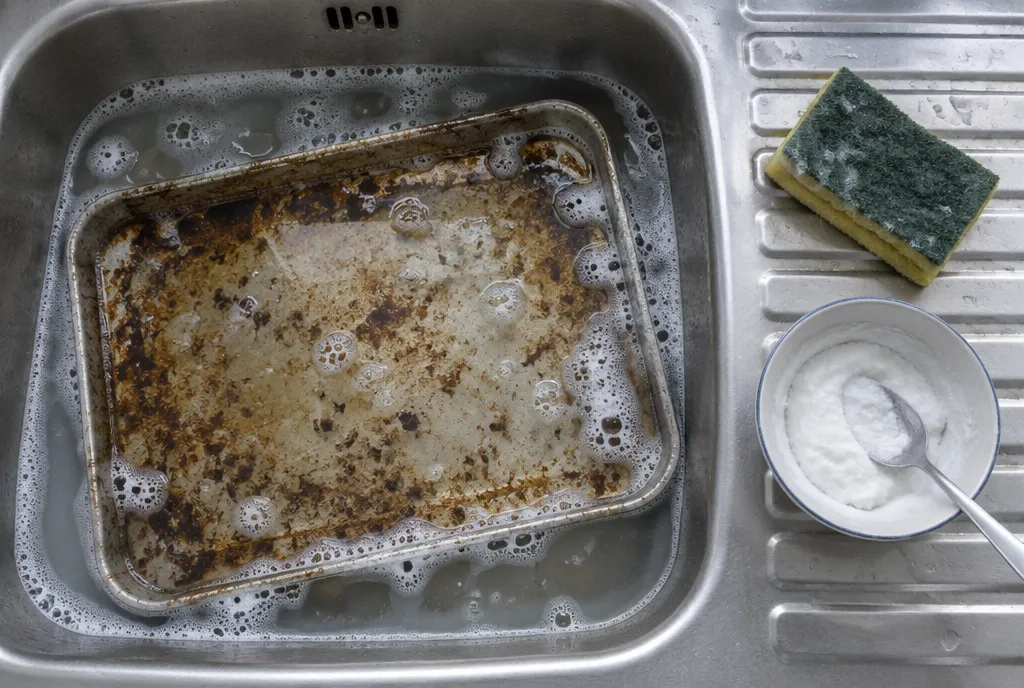
Once the tray has cooled, cover the residue with warm water and a little washing-up liquid and leave it for half an hour. Stubborn patches usually lift with a paste of bicarbonate of soda and water and a soft scourer. On non-stick trays, skip the wire wool. A silicone baking mat or a sheet of baking paper under messy foods saves most of this work.
What helps
Second tray
MasterClass non-stick baking tray (39 × 27cm)
Good for: an everyday roasting tray at a sensible price, sized for most UK ovens.
Not ideal if: you roast at very high temperatures every day; a heavier tray copes better.
Paid link
Liner
Amazon Basics silicone baking mats (2 pack)
Good for: reusable non-stick surface that saves scrubbing and protects the tray’s coating.
Not ideal if: you want crisp, deeply browned roast potatoes; they colour better on bare metal.
Paid link
Handling
Abbey heavy-duty double oven gloves
Good for: moving hot, heavy trays safely with both hands, which also avoids sudden tipping and spills.
Not ideal if: you already own a good pair.
Paid link
Quick answers
Can I bend a warped tray back flat?
Sometimes, gently, once it’s completely cool. If it pings back or cracks the coating, it’s time for a new one.
Are thicker trays always better?
For roasting, generally yes. For biscuits and delicate bakes, a lighter-coloured tray browns less aggressively.
For the pans on top of the hob, see why food sticks to stainless steel and why your cast iron keeps rusting.