Our pick
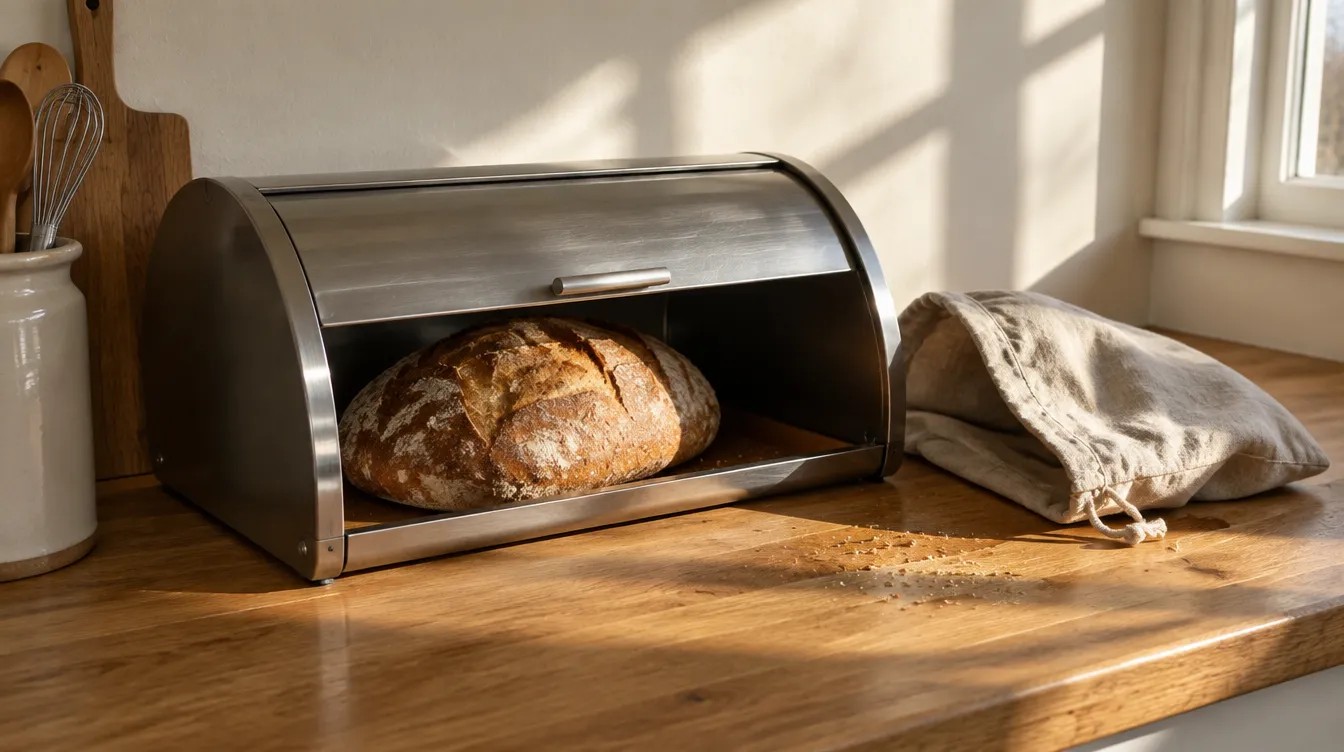
Brabantia roll top bread bin
Why we picked it
- Holds a large loaf with room for rolls
- Keeps bread out of light and drafts
- Roll top opens one-handed and tucks away
Worth knowing
- It won’t stop mould on its own in a warm, humid kitchen
- Wipe it out weekly, or old crumbs feed mould
Paid link
Two days ago it was a fresh loaf. Today it’s either dry and crumbly or showing blue-green spots, and you’re wondering whether you’re storing it wrong. You probably are, but in a fixable way.
Stale and mouldy are opposite problems
Stale bread has lost moisture from its starch, which firms up and recrystallises as it cools. This happens fastest at fridge temperature, which is why bread kept in the fridge goes stale sooner.
Mouldy bread has too much moisture, often trapped in plastic in a warm room. Mould spores are everywhere; give them warmth and damp, and they grow.
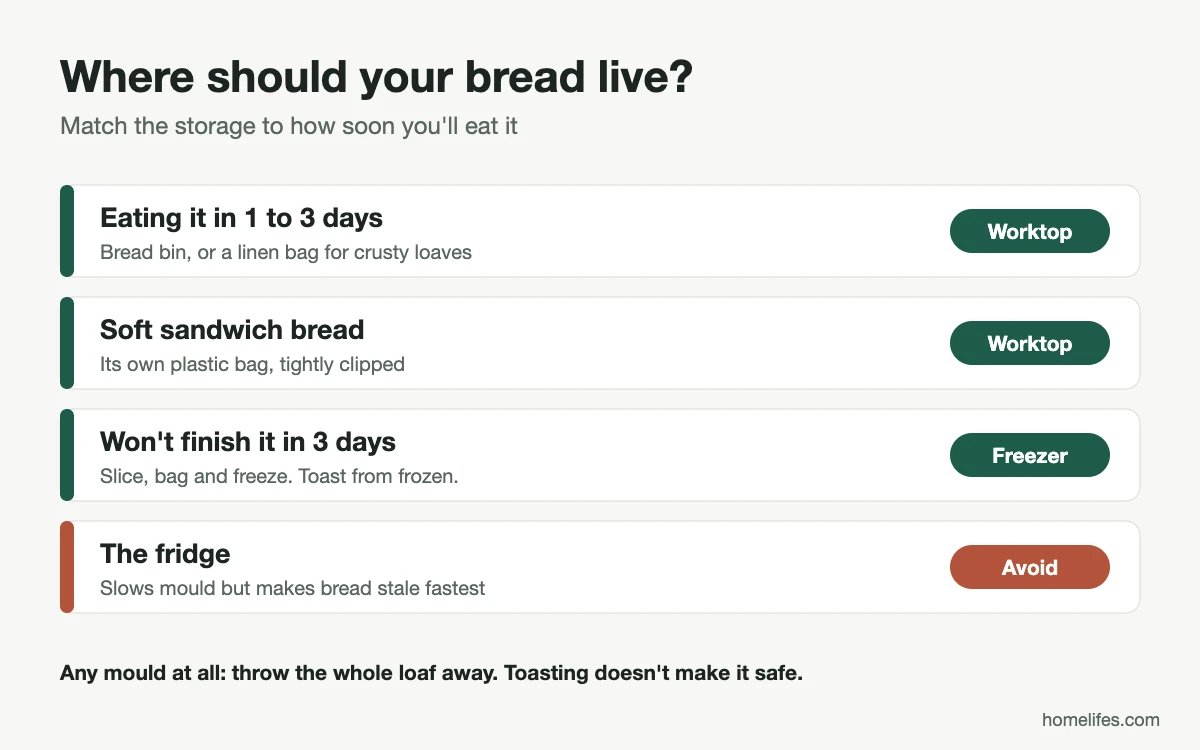
So the fridge slows mould but speeds up staling, and a sealed bag in a warm kitchen does the opposite. The trick is matching the storage to how fast you’ll eat the loaf.
Where it should live
| Storage | Good for | Watch out for |
|---|---|---|
| Bread bin | Eating within 2 to 3 days | Warm kitchens: wipe it out often |
| Linen or paper bag | Crusty loaves, keeping the crust crisp | Dries out faster than plastic |
| Plastic bag on the worktop | Soft sandwich bread | Traps moisture, so mould comes sooner |
| Fridge | Rarely the best choice for bread | Stales it quickly |
| Freezer | Anything you won’t finish in 3 days | Slice it first so you can take what you need |
The freezer is your friend
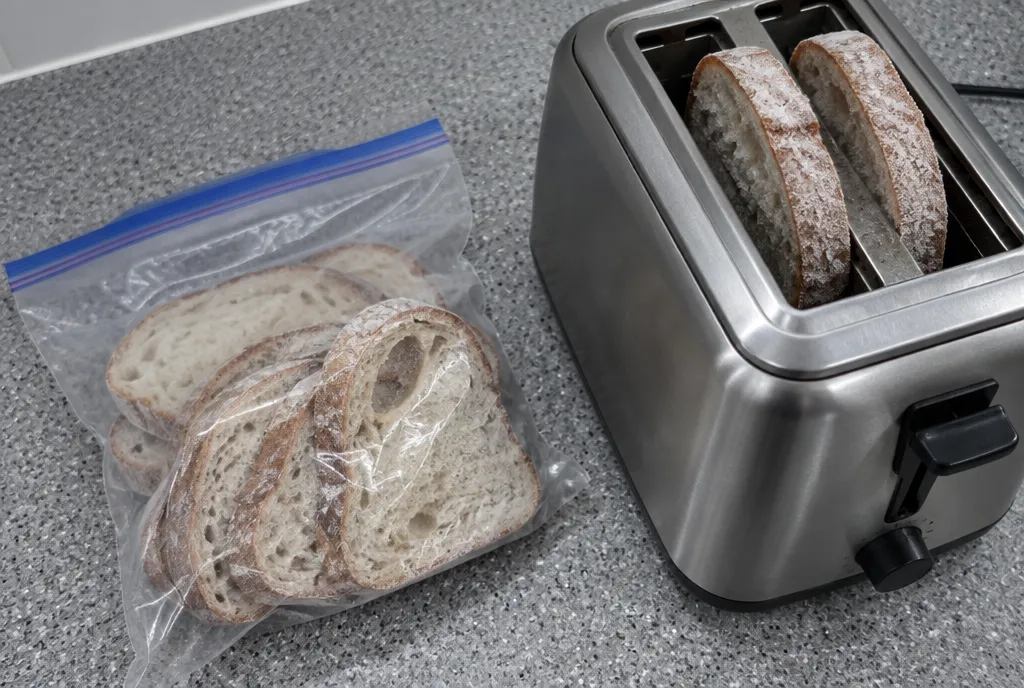
If you live alone or buy a big loaf, slice it on day one and freeze half. Slices toast straight from frozen, and a whole loaf thaws on the worktop in a few hours. Frozen bread tastes far closer to fresh than bread kept in the fridge.
Bakery loaves and supermarket loaves behave differently
Supermarket sliced bread usually contains preservatives and stays soft for days. A bakery sourdough or homemade loaf has none, so it stales and moulds faster but tastes better while it lasts. Plan to freeze part of anything without preservatives.
Rescuing bread that’s just stale
Stale isn’t spoiled. Run a crusty loaf briefly under the tap, or sprinkle it with water, then put it in a hot oven for five to ten minutes. The crust crisps up and the inside softens again. Eat it the same day, because it stales faster the second time.
Anything past saving makes good breadcrumbs, croutons or bread pudding. Blitz leftover ends and freeze the crumbs in a bag, ready for coating fish or topping a bake.
Freezing it properly
- Freeze bread on the day you buy it, not when it’s already going stale.
- Slice it first, and separate slices with baking paper if they tend to stick.
- Squeeze the air out of the bag, seal it well and label it with the date.
- For the best taste, use it within a few months.
If you see mould
Throw the whole loaf away. Bread is soft and porous, and food safety experts warn that mould spreads well beyond the visible spots, so cutting it off isn’t enough. Toasting doesn’t make it safe either. Then wipe the bread bin with a little vinegar before the next loaf goes in.
Storage that helps
Crusty bread
Organic linen bread bag (extra large)
Why it works: lets crusty bread breathe so the crust stays crisp.
Less useful if: you eat soft sandwich bread; plastic suits that better.
Paid link
Freezer
Reusable freezer bags (15 pack)
Why it works: zip-seal bags in several sizes for sliced loaves and rolls, washable and reusable.
Less useful if: you rarely freeze bread.
Paid link
Sealing
Bag clips
Why it works: closes the original bag tightly so soft bread doesn’t dry out.
Less useful if: you decant into a bin or bag anyway.
Paid link
Toasting from frozen and one side always comes out paler? See why your toaster browns unevenly. For everything else, here’s where food should live in a UK fridge.
Slicing a loaf cleanly matters too. Our bread knife guide explains why some knives crush the crumb.
For everything else you can batch up, see freezing food properly.