Our pick
Joseph Joseph Folio 4-piece colour-coded board set
Why we picked it
- Separate boards for raw meat, fish, veg and cooked food
- Slim case keeps them upright to dry
- Dishwasher-safe for a proper hot clean
Worth knowing
- Plastic scores with use, so replace boards when cuts get deep
- Thinner than a wooden board, so less stable for heavy chopping
Paid link
Somewhere along the way you heard that wooden boards are unhygienic, then that plastic is worse, then that bamboo is the answer. Meanwhile the board you actually use has a few deep grooves and a faint smell of onion.
Here’s the honest version: the material matters less than the habits around it.
The real risk is cross-contamination
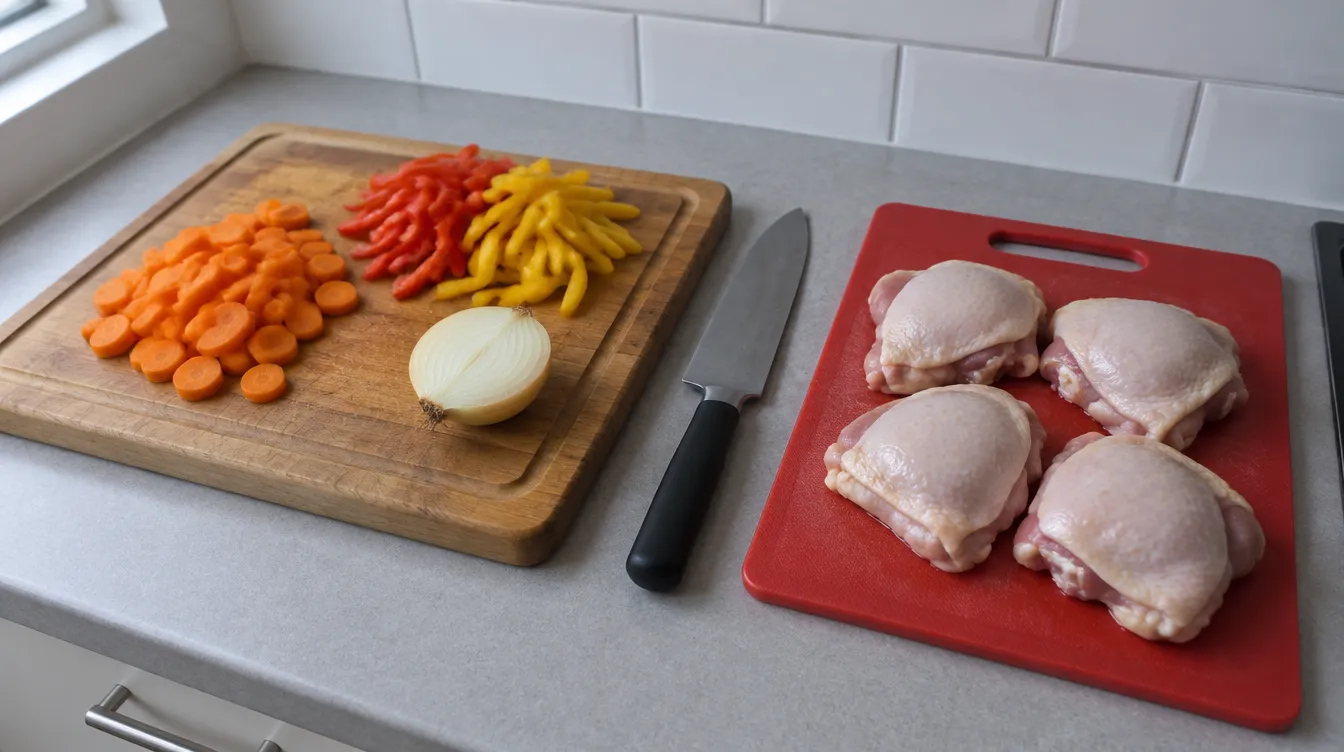
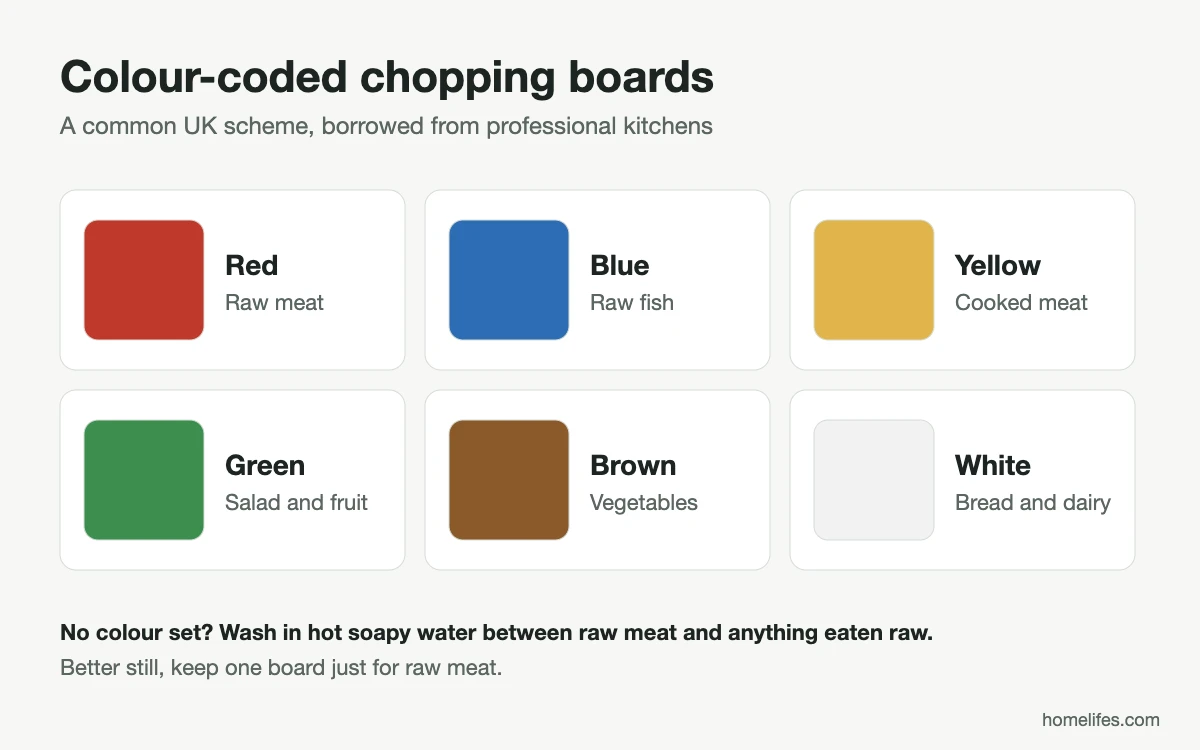
Food poisoning from a chopping board almost always comes from raw meat juices getting onto something that won’t be cooked, like salad or bread. UK food safety advice, such as this guidance from Dorset Council, is clear: wash boards in hot soapy water between raw and ready-to-eat food, and better still, use a separate board for each.
Wood, bamboo and plastic compared
| Wood | Bamboo | Plastic | |
|---|---|---|---|
| Kind to knives | Yes | Harder, so blunts edges faster | Yes |
| Dishwasher | No | No | Usually yes |
| Deep cuts | Close up somewhat over time | Resists cutting | Stay open and hold moisture |
| Care | Hand wash, dry upright, oil monthly | Hand wash, oil now and then | Wash hot, replace when scarred |
| Best for | Bread, veg, everyday prep | Light prep, serving | Raw meat and fish |
A practical setup for most kitchens: a good wooden board for vegetables, bread and cooked food, plus plastic boards for raw meat and fish that can go in the dishwasher.
How to clean each one
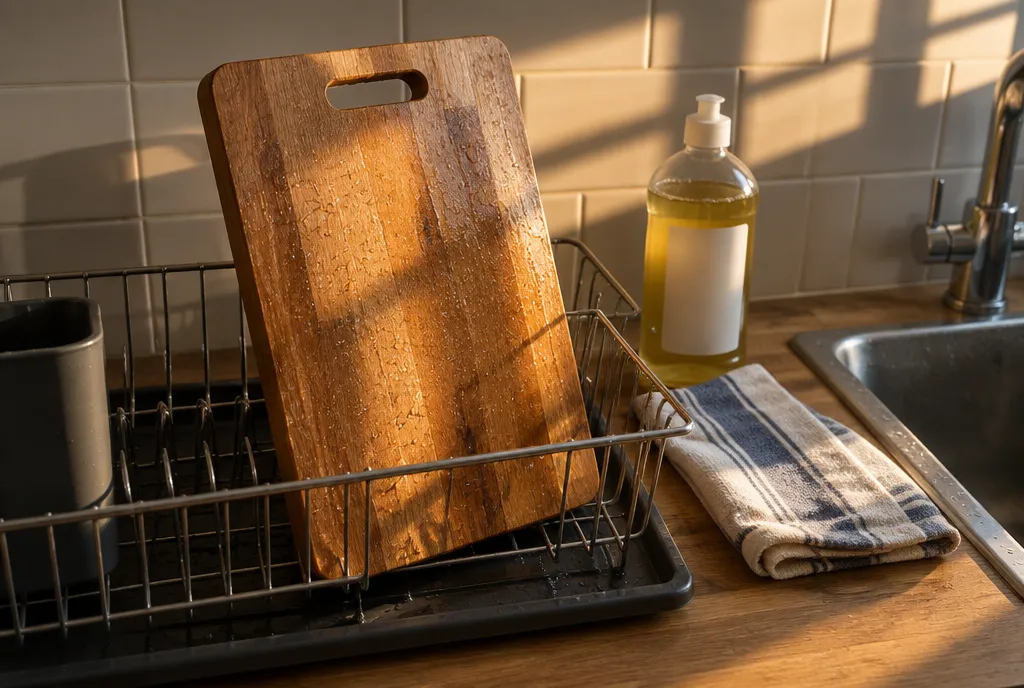
- Wood and bamboo: scrub with hot soapy water straight after use, rinse, then stand it upright to dry so air reaches both sides. Never soak it or put it in the dishwasher, which warps and splits it.
- Plastic: hot soapy water or the dishwasher. A hot dishwasher cycle is one of the most effective ways to clean a plastic board.
- Smells: rub with coarse salt and half a lemon, or a paste of bicarbonate of soda, then rinse.
- Oiling wood: once a month, or when it looks pale and dry, rub in a food-safe mineral oil and leave it overnight.
Habits that look after board and knife
- Scrape with the spine, not the edge. Sweeping chopped food across the board with the sharp edge blunts a knife faster than the chopping itself.
- Put a damp cloth underneath. A board that slides is how fingers get cut.
- Use both sides of a wooden board, one for strong flavours like garlic and onion, one for fruit and bread.
- Never leave it in the sink. Standing water is what warps and cracks wooden boards.
How many do you need? For most homes, two or three: one wooden board for everyday prep, and a plastic one or two kept for raw meat and fish.
When to replace a board
- Plastic with deep grooves you can catch a fingernail in.
- Wood that’s cracked, split or permanently warped.
- Any board with a smell that won’t wash out.
Boards we’d buy
Wooden
Tramontina teak end-grain board (45 × 34cm)
Good for: heavy everyday chopping. End grain is gentle on edges and big enough for a whole loaf or a chicken.
Not ideal if: you want something light to lift into the sink.
Paid link
Care
Food-grade chopping board oil
Good for: stopping wooden boards drying out and cracking.
Not ideal if: you only use plastic boards.
Paid link
Quick answers
Is wood more hygienic than plastic?
Studies have come out both ways. A well-kept board of either kind is safe; a deeply scored, badly dried one of either kind isn’t.
Can I use bleach on a chopping board?
For plastic, a diluted solution used occasionally is fine, rinsed well. For wood, stick to hot soapy water, salt and lemon, or vinegar.
A board is only half the story. Our guide to sharpening at home covers the knife.