Our pick
GastroMax ventilated microwave cover (25cm)
Why we picked it
- Traps steam so food heats more evenly and doesn’t dry out
- Vent lets pressure escape safely
- Stops splatter, so less cleaning
Worth knowing
- Check it fits your turntable before buying
- Plastic, so keep it away from grill or combination modes
Paid link
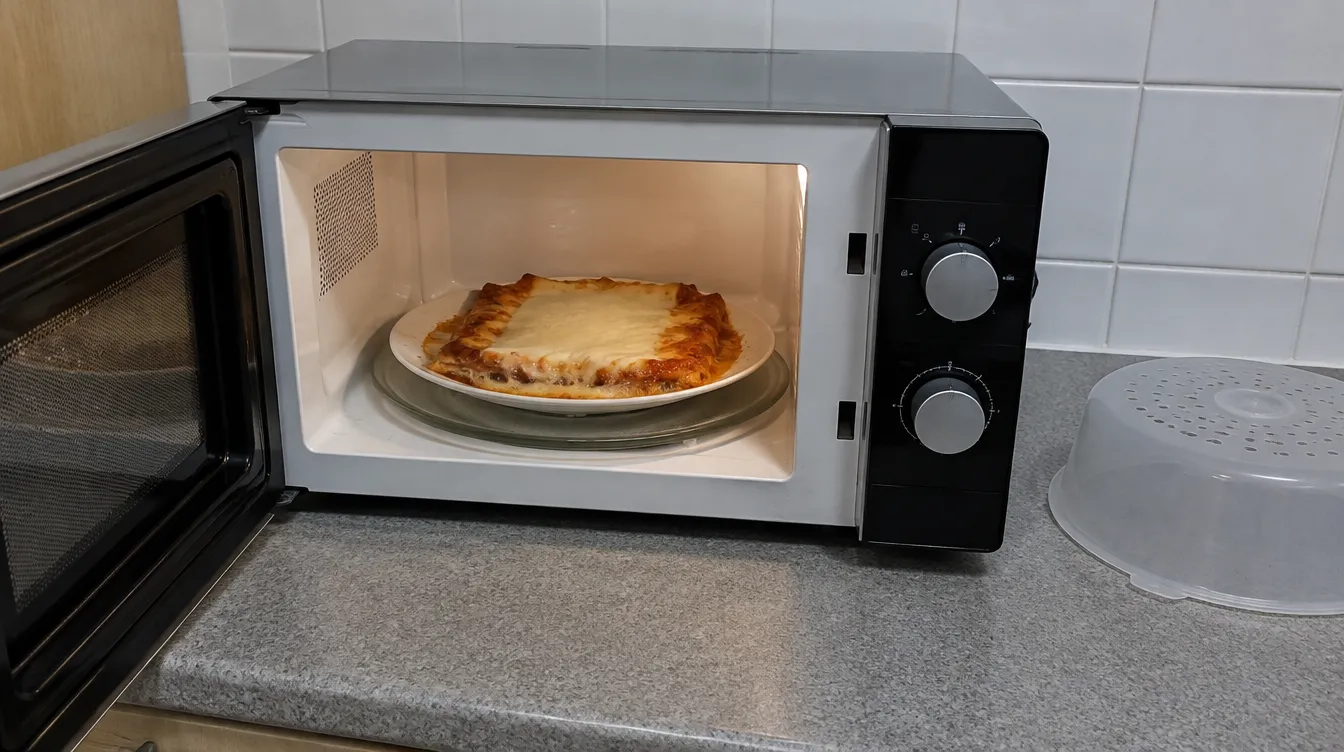
The edges are bubbling, the plate is too hot to touch, and the middle of the lasagne is still cold. Another two minutes and the edges turn to leather while the centre finally gets warm.
Why it happens
Microwaves don’t fill the oven evenly. They bounce around and create a pattern of hot and cool spots, which is why there’s a turntable: it moves food through them. They also only penetrate a few centimetres, so the middle of a thick dish heats mainly by the heat travelling in from the outside.
Frozen food is trickier still. Ice absorbs microwave energy far less readily than water, so the first patches to thaw start soaking up energy and get hotter and hotter, while frozen spots nearby barely change.
Five fixes that work
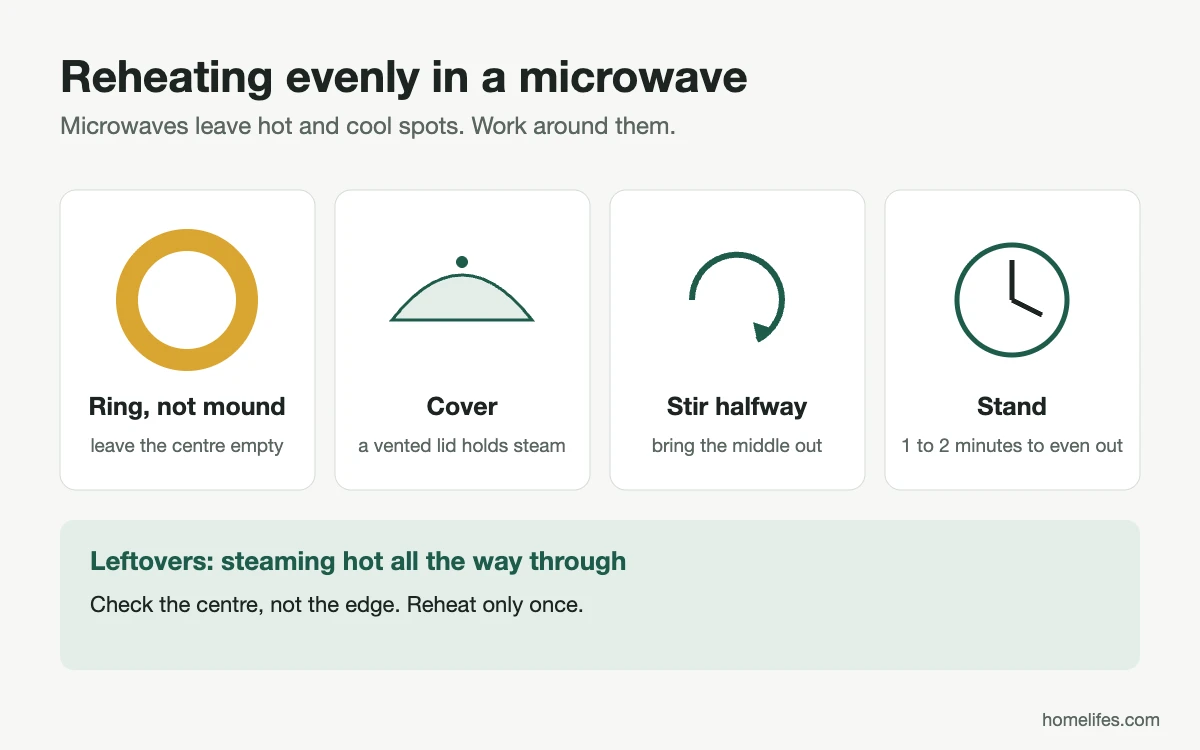
- Spread it out, with a gap in the middle. Arrange food in a ring rather than a mound. The centre of a plate is the hardest spot to heat.
- Cover it. A vented cover keeps steam in, which spreads heat and stops the surface drying.
- Stir or turn halfway. Bring the cooler middle out to the edge.
- Use lower power for longer. Medium power gives heat time to spread instead of scorching the edges.
- Let it stand. A minute or two of standing time lets the heat even out before you test it.
Is it hot enough to be safe?
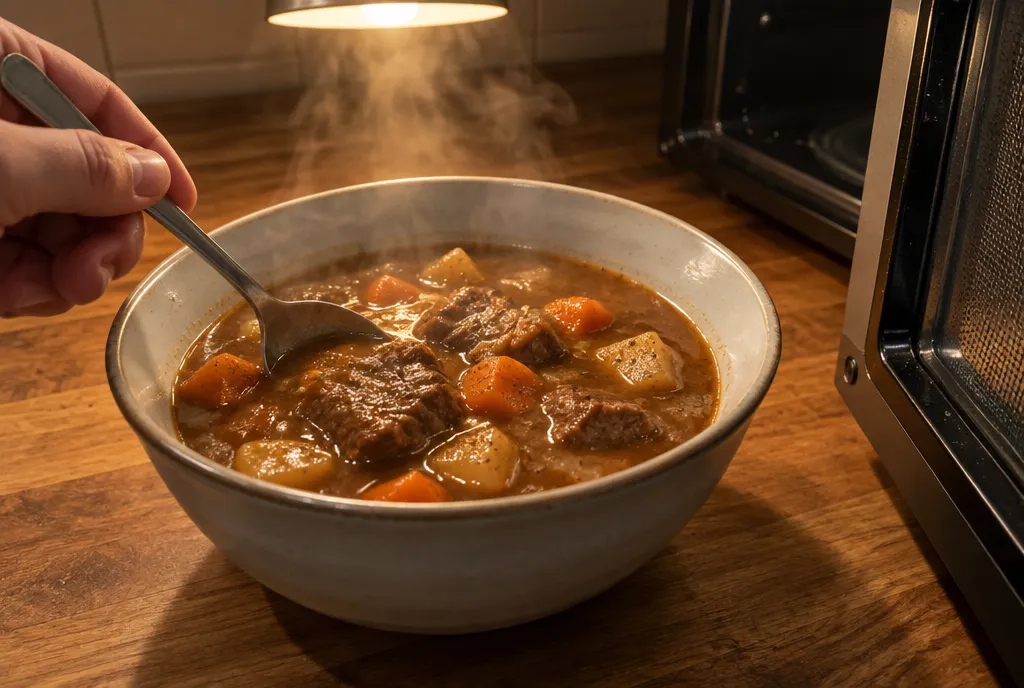
When reheating, food should be steaming hot all the way through, and UK food safety guidance is clear on that. Stir and check the centre, not just the edge. Only reheat leftovers once.
Defrosting without cooking the edges
Use the defrost setting, break pieces apart as soon as you can, and turn the food regularly. Cook defrosted food straight away. For larger items, defrosting overnight in the fridge is more even and safer.
When it’s the microwave
If food in the same dish now heats far more slowly than it used to, the turntable doesn’t turn, or you see sparks with nothing metal inside, stop using it and get it checked or replaced. When replacing, some models use inverter technology, which Panasonic says delivers power more steadily at lower settings rather than switching on and off, and that can help with even defrosting.
Dish
Borosil glass casserole with glass lid (1.5L)
Why it helps: glass heats evenly, the lid holds in steam, and it goes from microwave to table.
Watch out for: glass gets hot. Use a cloth to lift it out.
Paid link
Replacing
Panasonic NN-ST64QWBPQ 32L inverter microwave
Why it helps: inverter power control designed for steadier low-power cooking and defrosting.
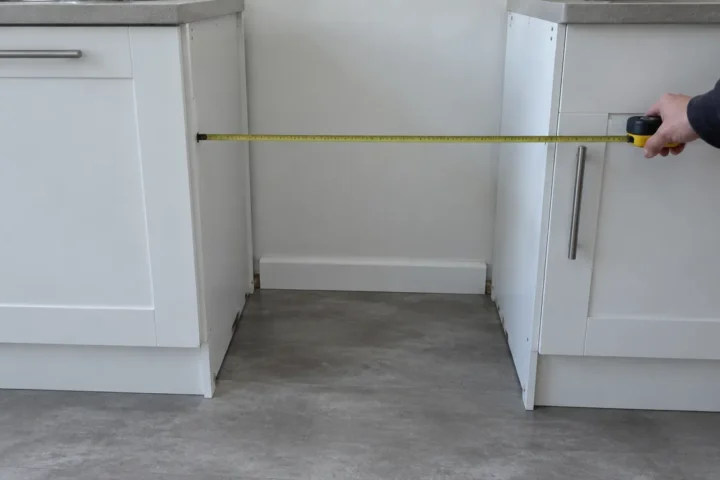
Watch out for: 32 litres is a large microwave. Measure your space.
Paid link
Reheating from frozen? Our guide to freezing food properly covers safe defrosting, and where food should live in your fridge covers leftovers.
Quick answers
Why does my plate get hotter than the food?
Some plates absorb microwave energy. If a plate gets very hot while the food stays cool, try a different one marked microwave-safe.
Is it safe to reheat rice in the microwave?
Cool leftover rice quickly, keep it in the fridge, and reheat it only once until it’s steaming hot throughout.