Our pick
Tefal Titanium Essential frying pan (28cm)
Why we picked it
- Affordable, so replacing it in a few years doesn’t sting
- 28cm covers most cooking for one or two
- Easy to find in UK shops if you’d rather see it first
Worth knowing
- Not designed for induction hobs
- Like any non-stick, it lasts longer on medium heat with no metal tools
Paid link
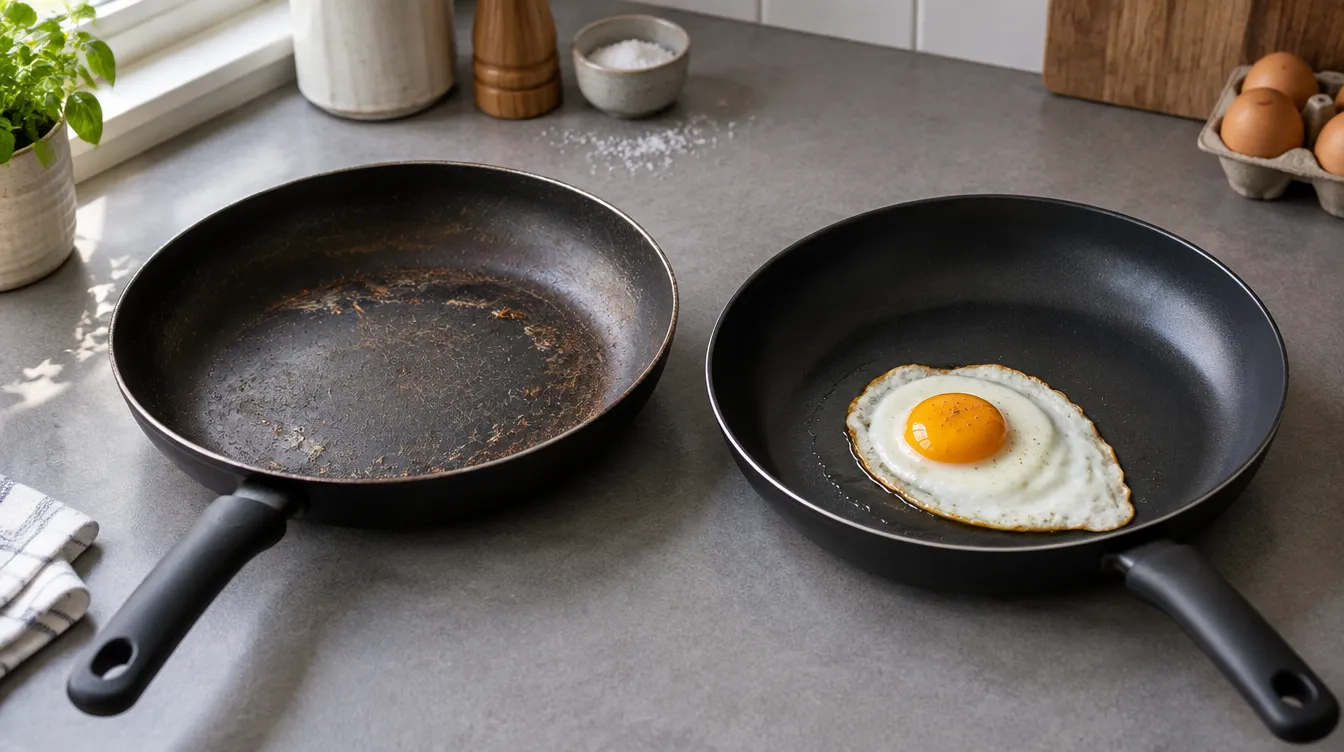
Eggs that used to glide now cling. The omelette tears in half. You add a bit more oil, then a bit more after that, and suddenly the pan you bought last spring is the reason breakfast takes twice as long.
It’s tempting to blame a cheap pan. In most kitchens, though, the coating didn’t fail on its own. It was worn down slowly by a handful of habits that feel completely harmless.
It’s usually not the pan
Most non-stick pans use a PTFE coating, the same family of materials sold as Teflon. Very little sticks to it, which is the whole point. The catch is that it’s a thin layer sitting on the metal, and it’s softer than almost anything you stir with.
Ceramic-style coatings are made differently and are popular as an alternative. In everyday use they tend to lose their slickness sooner. Either way, think of the coating as something that wears out. Treated carefully it lasts years. Treated roughly, it can be tired within months.
Four habits that wear the coating down
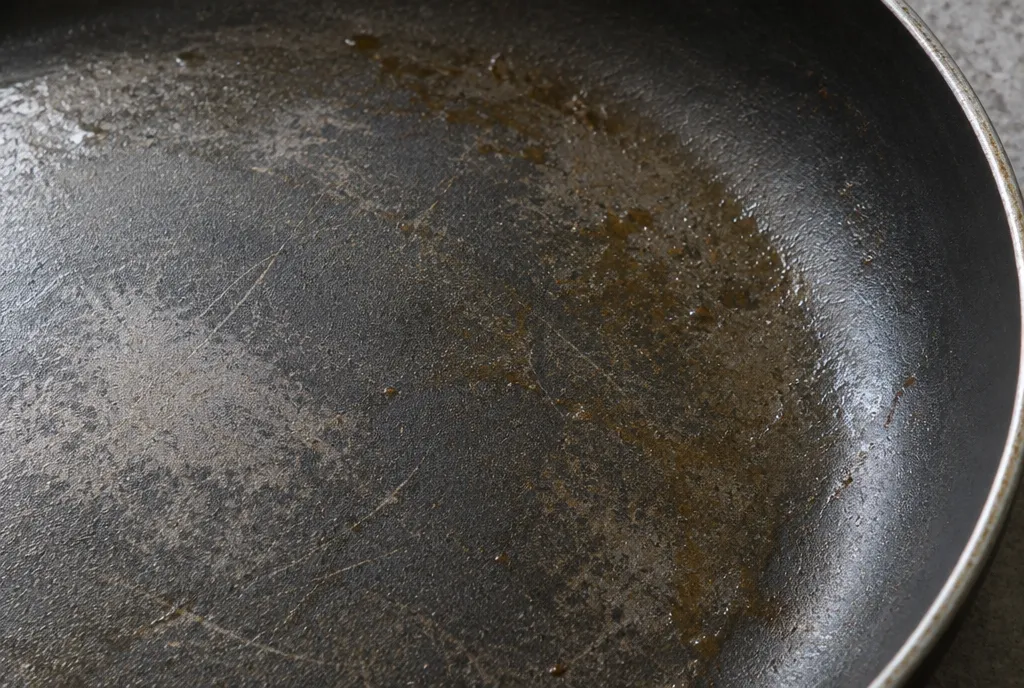
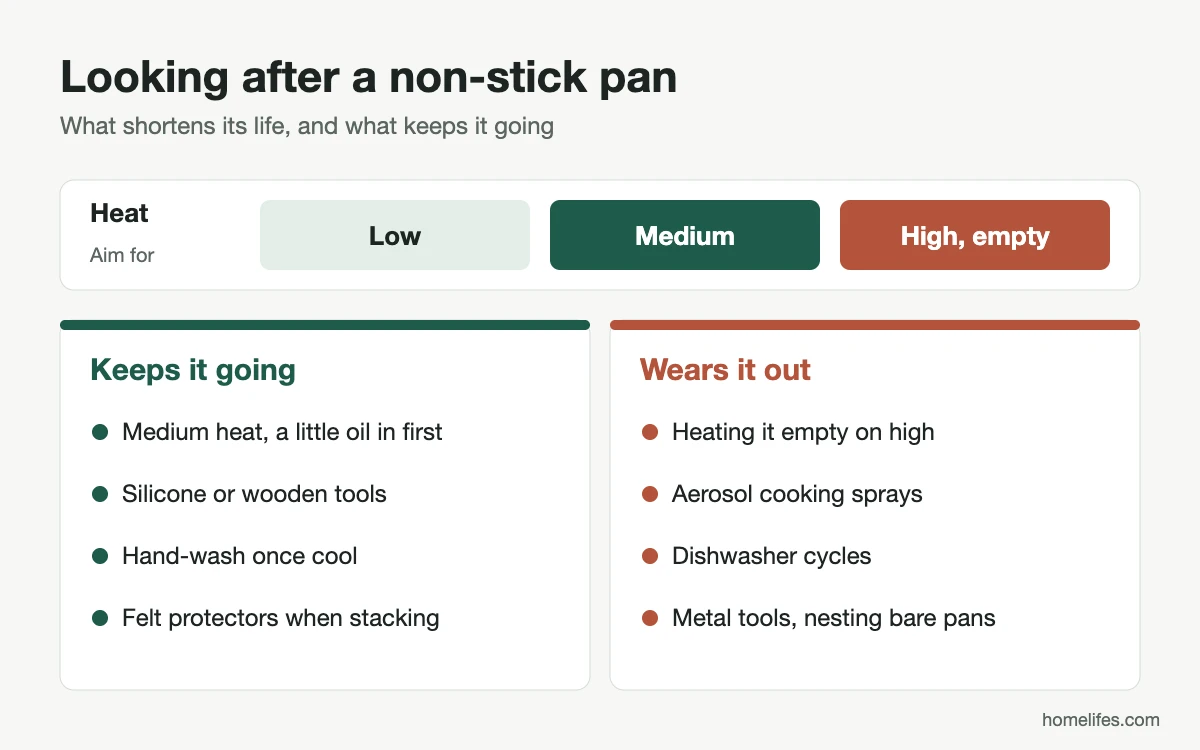
- Heating it empty on high. This ages a coating faster than anything else. Medium heat with a little oil already in the pan is what most manufacturers recommend.
- Aerosol cooking sprays. They leave a thin film that bakes on and builds up. That tacky, faintly brown layer is often what’s sticking, not the coating itself. Tefal’s own care guidance says not to use them on non-stick at all.
- The dishwasher. Plenty of pans are labelled dishwasher-safe, but hot cycles and harsh detergent still wear the surface. Hand-washing buys you time.
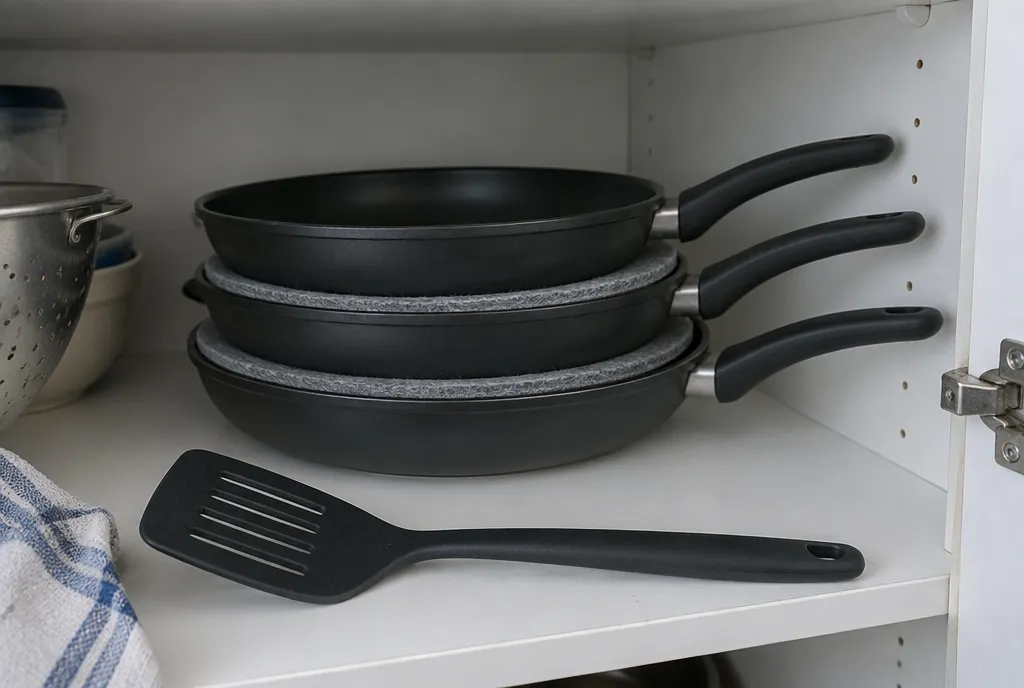
- Metal tools and stacking. One scrape won’t ruin a pan. Hundreds of small ones will, and so will nesting pans directly inside each other in the cupboard.
A two-minute rescue before you replace it
Before you spend anything, try a proper clean. Mix bicarbonate of soda with a little water into a paste, rub it gently over the surface with a soft sponge, then rinse and dry. Wipe a few drops of oil over the coating with kitchen roll afterwards. Tefal suggests the same reset for pans that have started to stick.
If sprayed-on residue was the problem, you can get a surprising amount of slip back. If the coating is flaking, or the base has warped so the pan rocks on the hob, no amount of cleaning will help. That one is done.
Going forward, keep the heat at medium, use a teaspoon of oil instead of spray, and let the pan cool before it goes near cold water. A sudden temperature drop is one of the easiest ways to warp a base.
PTFE or ceramic, and is non-stick safe?
This is the question we’re asked most, so here’s the plain version. The chemical people worried about for years was PFOA, which was once used to make PTFE coatings. It’s now restricted in cookware sold in the UK, so a pan you buy new today won’t contain it.
PTFE itself is a different material. Tefal points out that food-safety bodies, including the European Food Safety Authority, treat it as safe for food contact. It does belong to the wider PFAS family, though, and that family is under review: a UK parliamentary committee has recommended phasing PFAS out of non-essential products such as cookware. Nothing has been banned yet, but it’s reasonable to want to know.
| PTFE non-stick | Ceramic non-stick | |
|---|---|---|
| How slippery | Very, especially for eggs | Slippery when new |
| How long the slip lasts | Several years with care | Usually fades sooner |
| Heat | Keep to low and medium | Copes with a bit more |
| PFAS | PTFE is a PFAS | Usually made without PFAS |
Our view: if you cook gently and want the easiest egg pan, PTFE is still the practical choice. If avoiding PFAS matters to you, ceramic is the trade, and you’ll replace it a little sooner. Either way, the biggest safety habit is the same: don’t heat an empty pan on high. Manufacturers warn that overheated PTFE can give off fumes, which are a particular risk to pet birds.
Buying the next one
Weight matters more than most people expect. A thin pan heats unevenly, so the coating gets cooked in one hot spot while the edges stay cool. A heavier, flatter base spreads the heat and resists warping.
Check your hob before anything else. Induction needs a magnetic base, and plenty of budget pans aren’t built for it. It’s also worth reading what the coating guarantee actually covers, since most exclude overheating.
The ten-second induction check
Look for the coil symbol on the base or packaging. If there isn’t one, hold a fridge magnet to the bottom of the pan. If it sticks firmly across the base, the pan will work on induction. If it only clings at the edge, or not at all, it won’t heat properly.
Two setups, depending on how much you cook
For a small kitchen
One or two people, a handful of pans and not much cupboard space.
The pan
Tefal Titanium Essential frying pan (28cm)
Good for: an affordable everyday pan that’s easy to find and easy to replace. The 28cm size covers most cooking for two.
Not ideal if: you cook on induction. This model isn’t designed for it.
Paid link
The protector
Pan protectors for stacking (12 pack)
Good for: stopping the base of one pan scratching the coating of the one underneath. They matter most where everything has to nest.
Not ideal if: you hang your pans or store them side by side.
Paid link
The pan does the cooking; the protectors stop the cupboard undoing all your careful washing.
For a daily cook
Someone who fries something most days and wants the pan to last.
The pan
Tower Cerastone forged frying pan (24cm)
Good for: a sturdier forged body with a non-stick coating and soft-touch handles, sitting between budget and premium on price.
Not ideal if: you want to finish dishes in the oven. Check the listing for its limits first.
Paid link
The tool
Wiltshire silicone slotted turner
Good for: sliding under eggs and fish without scraping. It’s the cheapest upgrade for any non-stick pan.
Not ideal if: you already have a wooden spatula you like using.
Paid link
A mid-range pan only lasts as long as its coating, and nothing shortens that faster than metal tools.
We’d skip the ten-piece non-stick sets. Most kitchens rely on two or three pans, so buying those individually and a little better usually works out cheaper in the long run.
Prefer a pan that can last for decades? Our guide to why cast iron pans rust covers looking after one.
Thinking of switching to uncoated pans? Our guide to why food sticks to stainless steel explains how to cook in one.
Roasting as well as frying? See why oven trays warp.
Quick answers
Is it safe to keep using a scratched non-stick pan?
Light scratches mostly affect performance. Once the coating is visibly flaking, replace it: flakes in food aren’t pleasant, and the pan won’t release properly anyway.
Can a worn coating be restored?
Not really. A deep clean removes residue that makes a pan seem worn, but once the coating itself has gone, nothing brings it back.
How long should a non-stick pan last?
It depends on how it’s treated. On medium heat, with no metal and hand-washing, a decent pan can give several years of daily use.
If your pans are fine but your bread keeps tearing, read why your bread knife tears instead of slicing.
Update, 2 October 2026: we replaced two pans that are no longer sold on Amazon UK, and dropped our premium induction pick until we find one that is.