Our pick
Lodge pre-seasoned cast iron skillet (26cm)
Why we picked it
- Comes seasoned, so it’s ready to use straight away
- Works on gas, electric, induction and in the oven
- Heavy enough to hold heat for searing
Worth knowing
- It’s heavy, especially once there’s food in it
- The handle gets hot, so use a holder or a cloth
Paid link
You left it on the drainer overnight. By morning there’s a rusty bloom across the base, and the pan you were told would last a lifetime suddenly looks ruined.
It isn’t. Rust on cast iron is common, it’s fixable, and once you understand why it happens it rarely comes back.
What’s actually protecting the iron
Bare cast iron rusts easily. What stops it is seasoning: thin layers of oil that have been heated until they bond to the metal and harden into a slick, dark coating. Every time you cook with a little fat, you add to it.
Rust appears wherever that coating is thin or broken and the iron meets water and air. The usual culprits are soaking, leaving the pan wet, the dishwasher, and long simmers of acidic food like tomato sauce, which can wear the seasoning back.
The twenty-minute rescue
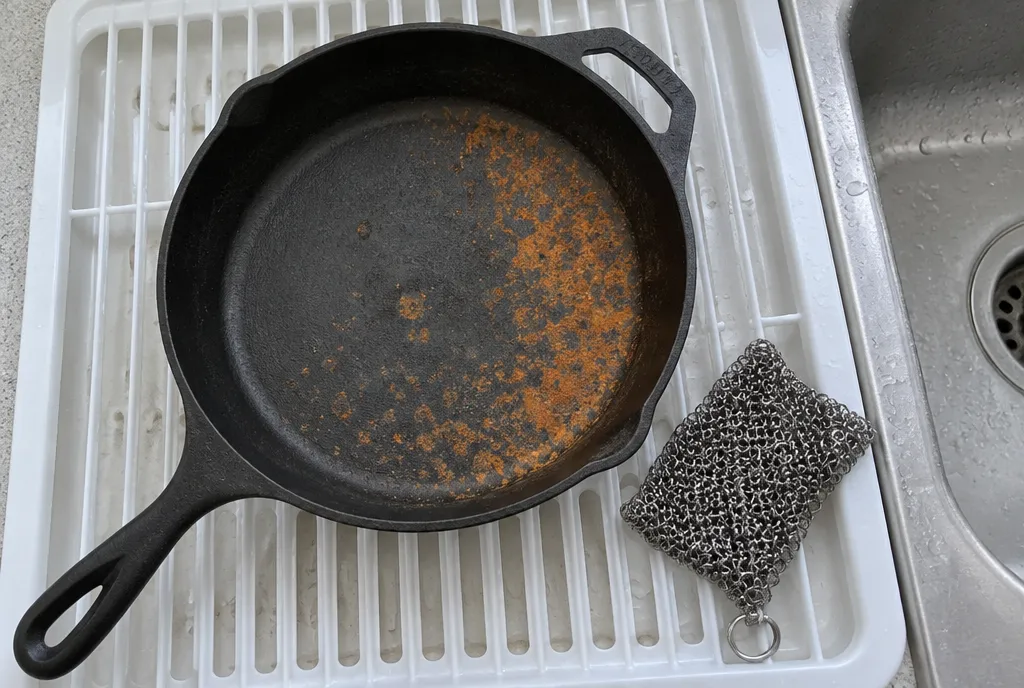
This follows Lodge’s own guidance for a rusty pan:
- Scrub the rust with warm, soapy water and steel wool until you’re back to bare metal. Soap is fine this time, because you’re about to re-season.
- Rinse, then dry it completely with a towel.
- Put it on a low hob for a few minutes to drive off the last of the moisture.
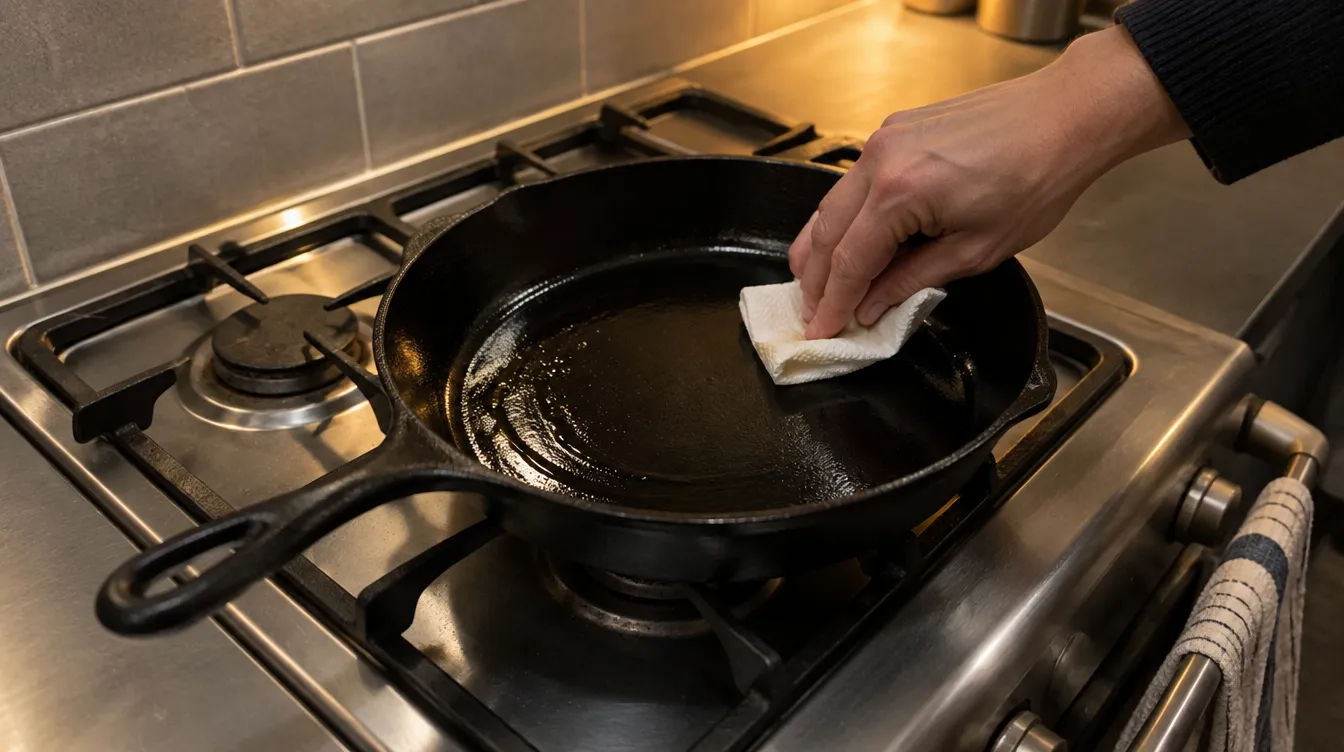
- Rub a very thin layer of cooking oil over the whole pan, inside and out, then wipe it back until it looks almost dry.
- Bake it upside down in a hot oven for about an hour, with foil on the shelf below to catch drips. Let it cool in the oven.
A few small spots don’t need the full treatment. Scour them, rinse, dry and rub on a little oil, and just cook with it.
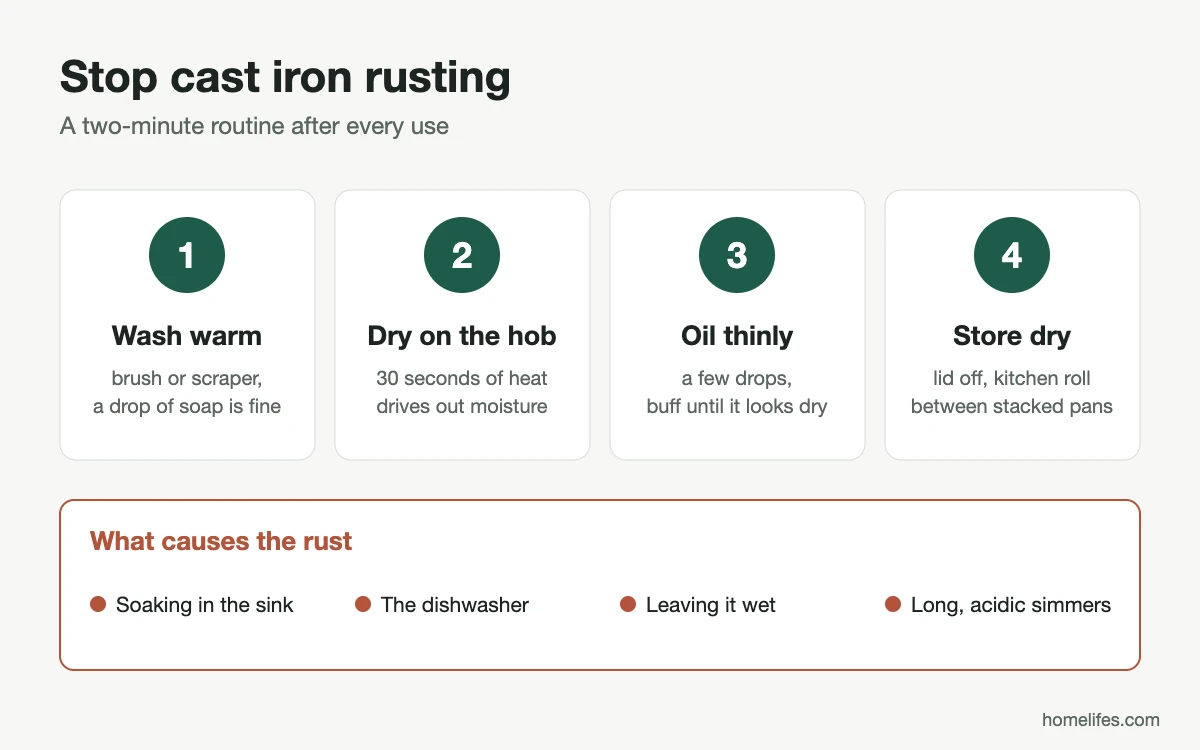
The two-minute habit that stops it coming back
- Wash while it’s warm, with hot water, a brush or scraper, and a drop of soap if you like. A little soap won’t hurt modern seasoning.
- Never soak it, and keep it out of the dishwasher.
- Dry it on the hob, not just with a tea towel. Thirty seconds of heat gets into the pores.
- Wipe on a few drops of oil while it’s still warm, then buff it until it looks dry rather than greasy.
Store it somewhere dry with the lid off, or with a sheet of kitchen roll inside if you stack pans on top.
Build the seasoning back up
A freshly re-seasoned pan has only one thin layer. The quickest way to thicken it is to cook fatty, forgiving things for the first few weeks: bacon, sausages, shallow-fried potatoes, cornbread. Every session adds another layer, and within a month the surface goes from dull grey to a deep, slightly glossy black.
Hold off on long tomato sauces, wine reductions and vinegar until then. A quick splash of something acidic is fine on a well-seasoned pan; an hour of simmering isn’t.
Enamelled cast iron is a different animal
Casserole dishes with a coloured enamel coating, inside and out, don’t need seasoning and won’t rust where the enamel is intact. The exception is the bare rim, where lid and pot meet. Dry that edge properly and rub on a drop of oil now and then, and it will stay clean. Treat the enamel itself like any other pan: no metal scourers, and let it cool before it meets cold water.
When a pan really is past saving
Almost never. Deep pitting or a crack is the end of the road, and a pan that rocks badly on a flat hob won’t cook evenly. Everything else, from a crust of rust to a sticky mess of old oil, comes off with steel wool and patience.
Sticky, not rusty?
A tacky surface is the opposite problem: too much oil left on during seasoning. Put the pan in a hot oven for an hour and the excess will bake off. Next time, wipe the oil back harder than feels sensible.
Kit that makes it easier
Cleaning
Lodge deluxe pan scraper
Good for: shifting stuck-on food without stripping seasoning, and it’s shaped to fit the curve of the pan.
Not ideal if: you already have a plastic scraper you like.
Paid link
Cleaning
Stainless steel chainmail scrubber
Good for: stubborn residue in seconds, and it rinses clean.
Not ideal if: you’re worried about scratching: use it gently on a well-seasoned pan.
Paid link
Handling
Lodge silicone hot handle holder
Good for: the handle, which gets as hot as the pan.
Not ideal if: you always reach for an oven glove anyway.
Paid link
Cooking with stainless steel as well? Read why food sticks to stainless steel pans.
Roasting trays can suffer too: see why oven trays warp and how to stop it.
Quick answers
Is it safe to cook in a pan with a little rust?
A small amount of surface rust isn’t dangerous, but it will taste metallic and food will stick. Scrub it off and re-oil before you cook.
Can I use washing-up liquid on cast iron?
Yes, a small amount. Modern seasoning is tougher than the old warnings suggest. What really damages it is soaking and the dishwasher.
If your everyday pans are the problem instead, read why your non-stick pan stopped being non-stick.