Our pick
SHAN ZU 1000/6000 whetstone
Why we picked it
- Two grits in one stone: 1000 to sharpen, 6000 to polish
- Non-slip bamboo base keeps it steady on the worktop
- Gives the best edge of any home method once you’ve got the knack
Worth knowing
- There’s a learning curve: expect a few clumsy sessions
- Soak or wet it before use, as the instructions say
Paid link
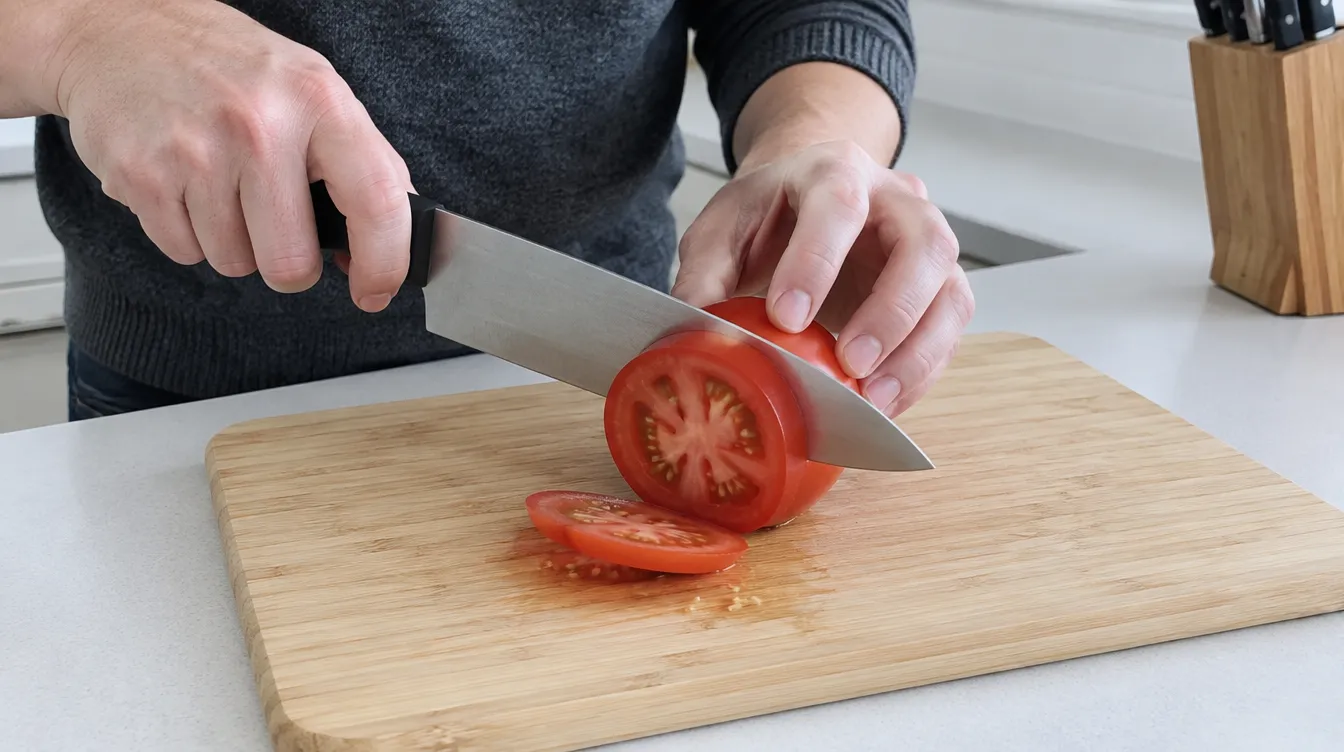
Tomatoes skid. Onions get crushed instead of sliced. You lean harder on the knife to compensate, which is exactly how people cut themselves. A dull knife isn’t just annoying; it’s the less safe one.
Honing and sharpening are different jobs
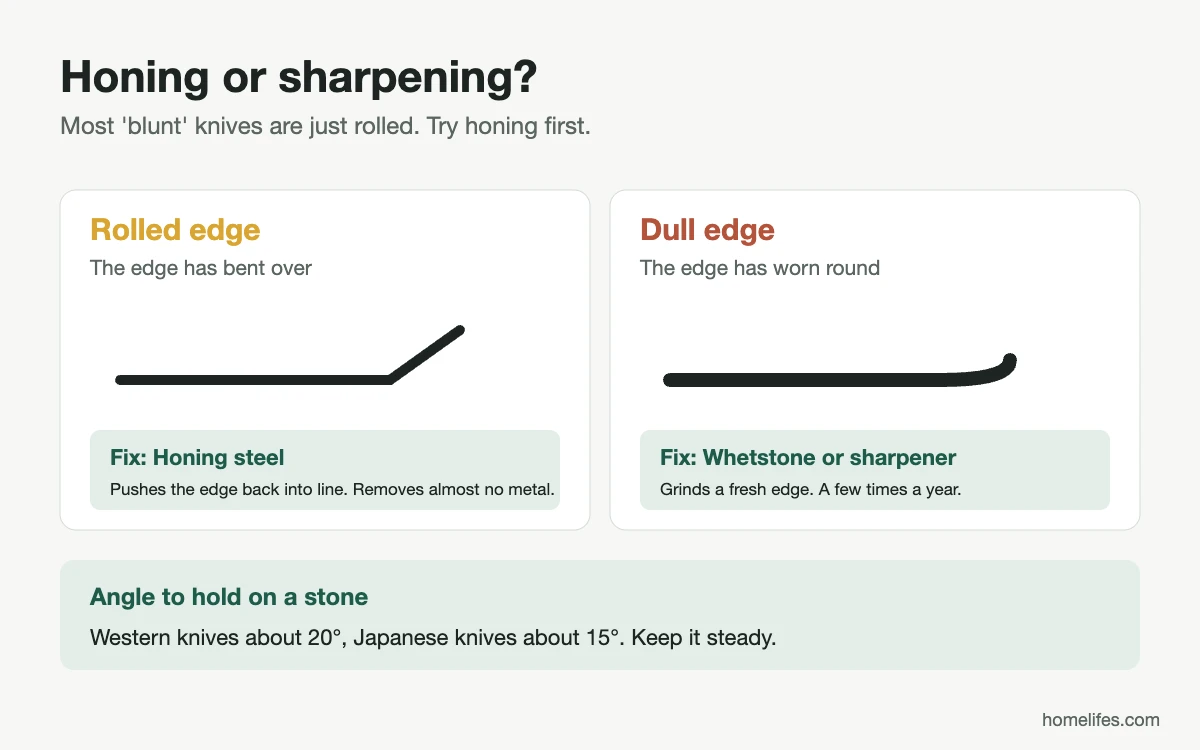
Sharpening grinds away a little metal to make a new edge. You need to do it occasionally, a few times a year for a knife used every day.
Honing doesn’t remove much metal at all. It pushes a bent, rolled edge back into line. That’s what the steel rod in a knife block is for, and a few strokes before cooking keeps a sharp knife feeling sharp for longer.
Most knives that feel blunt are actually just rolled. Try honing first. If that doesn’t bring it back, it needs sharpening.
The three home methods, compared
| Method | Best for | Skill needed | Watch out for |
|---|---|---|---|
| Whetstone | The sharpest, longest-lasting edge | Moderate, with practice | Holding a steady angle |
| Honing steel | Keeping an edge between sharpenings | Low | It won’t fix a truly dull knife |
| Pull-through sharpener | Fast, foolproof touch-ups | Very low | Removes more metal, edge is rougher |
Using a whetstone, step by step
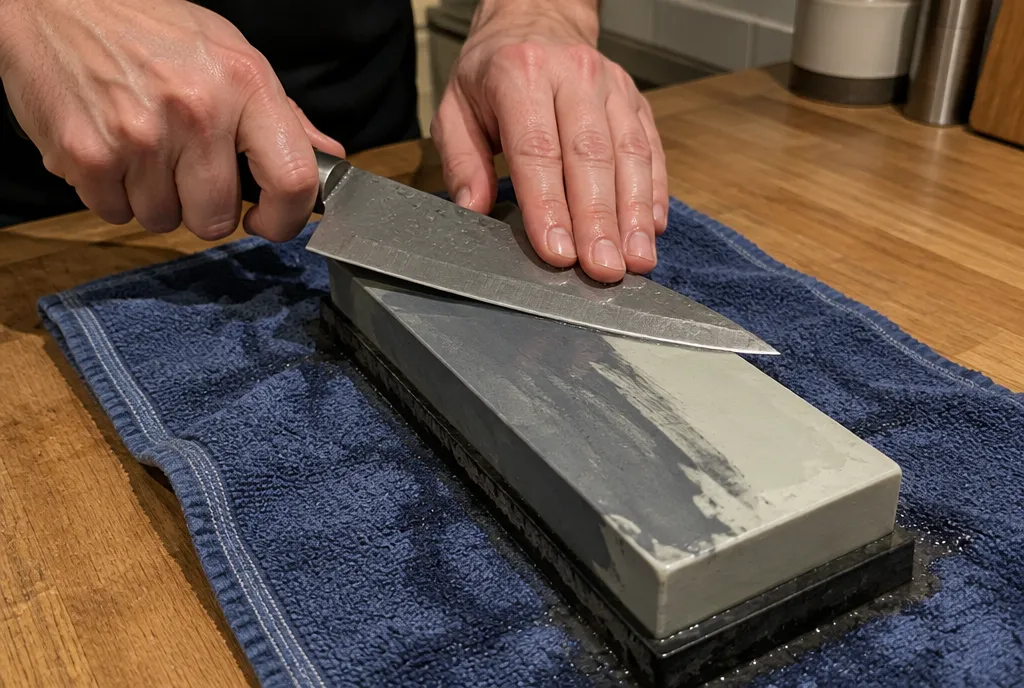
- Soak or wet the stone as the instructions say, and set it on a damp towel so it can’t slide.
- Start on the coarse side (1000). Hold the blade at roughly 15 to 20 degrees. Two stacked coins under the spine is a decent guide, or use a clip-on angle guide.
- Push the edge across the stone as if slicing a thin layer off it, heel to tip, about ten strokes.
- Feel the opposite side of the edge for a slight burr along the whole length. When it’s there, switch sides and repeat.
- Move to the fine side (6000) and repeat with lighter pressure to polish the edge.
- Finish with a few alternating strokes, rinse and dry the knife.
The single most common mistake is changing the angle mid-stroke, which rounds the edge instead of sharpening it. Slow and steady beats fast.
How to tell whether a knife is sharp
- The paper test: hold a sheet of printer paper by one corner and slice down through it. A sharp knife glides; a dull one snags and tears.
- The tomato test: a sharp edge breaks the skin under its own weight with a gentle draw. If you have to press, it’s time.
- Look along the edge in good light: bright glints are flat, rounded spots that need sharpening.
Getting the angle right for your knife
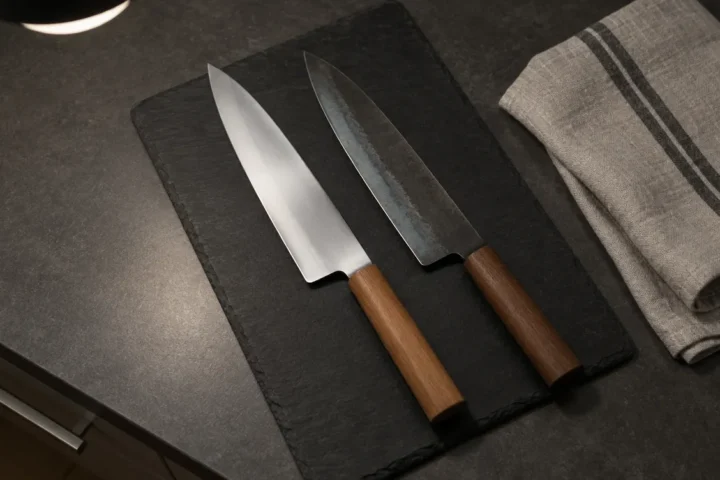
Most Western kitchen knives are sharpened at around 20 degrees per side. Many Japanese knives are thinner and sharpened closer to 15 degrees, which gives a keener but more delicate edge. If you’re not sure, check the maker’s website, or match the existing bevel by colouring the edge with a marker and seeing where the stone removes it.
When to pay a professional
Chipped edges, a broken tip or a very dull, neglected knife take a lot of coarse grinding. A sharpening service will reshape it in minutes, and many cookshops and markets offer one. After that, regular honing and the occasional session on the stone keep it going.
What about serrated knives?
Bread knives and other serrated blades can’t go on a flat stone or through most pull-through sharpeners. They need a slim tapered rod worked through each scallop, or a professional service. We explain more in why your bread knife tears instead of slicing.
Tools for each method
For whetstone users
Angle guide
Sharpal angle pyramid guide (2 pack)
Good for: learning to hold a consistent angle until your hands remember it.
Skip it if: you’re already confident freehand.
Paid link
For quick maintenance
Honing
Victorinox sharpening steel (23cm)
Good for: a few strokes before cooking to keep an edge straight and keen.
Skip it if: your knives are properly dull; hone after sharpening, not instead of it.
Paid link
Pull-through
AnySharp knife sharpener
Good for: quick, safe touch-ups. It suckers to the worktop, so your hands stay clear of the blade.
Skip it if: you own expensive Japanese knives and want a finer edge.
Paid link
Your board matters as much as your stone. See wood, bamboo or plastic: which chopping board is most hygienic.
Not sure which knives deserve the effort? See the kitchen knives you actually need.
Quick answers
How often should I sharpen?
For a knife used daily, a proper sharpening every few months, with a few honing strokes before most uses.
Is a sharp knife really safer?
Yes. It goes where you aim it with less force, so it’s less likely to slip off food and into a finger.
Storage matters as much as sharpening. Our bread knife guide covers how to keep any edge sharp between uses.