Our pick
Jamie Oliver by Tefal Cook Smart stainless frying pan (28cm)
Why we picked it
- Uncoated stainless, so it browns properly and lasts for years
- Works on induction as well as gas and electric
- Big enough to sear without crowding
Worth knowing
- It needs preheating and a little fat, like any stainless pan
- Food will stick if you rush it; the guide below explains why
Paid link
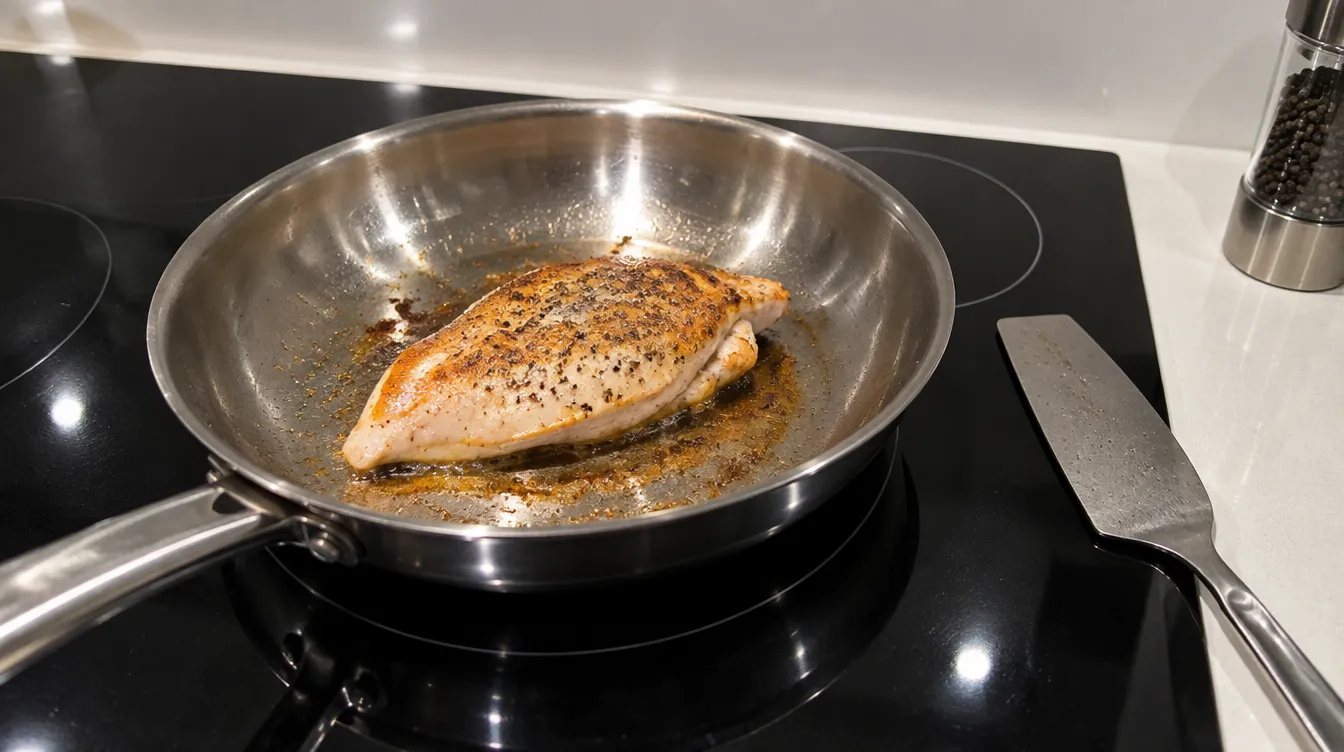
You switched to stainless steel because it lasts forever and doesn’t have a coating to wear out. Then the first chicken breast welded itself to the base and left half its skin behind.
The pan isn’t faulty. Stainless steel was never meant to be non-stick. Used the right way it releases food surprisingly well, and the browned bits it leaves behind are the start of the best pan sauces you’ll make.
Why it happens
Raw protein, like meat, fish and egg, bonds to hot metal on contact. Once the surface underneath cooks and forms a crust, that bond lets go and the food releases on its own. Sticking almost always means one of three things: the pan wasn’t hot enough, the food was wet, or it was moved before the crust had formed.
The water droplet test
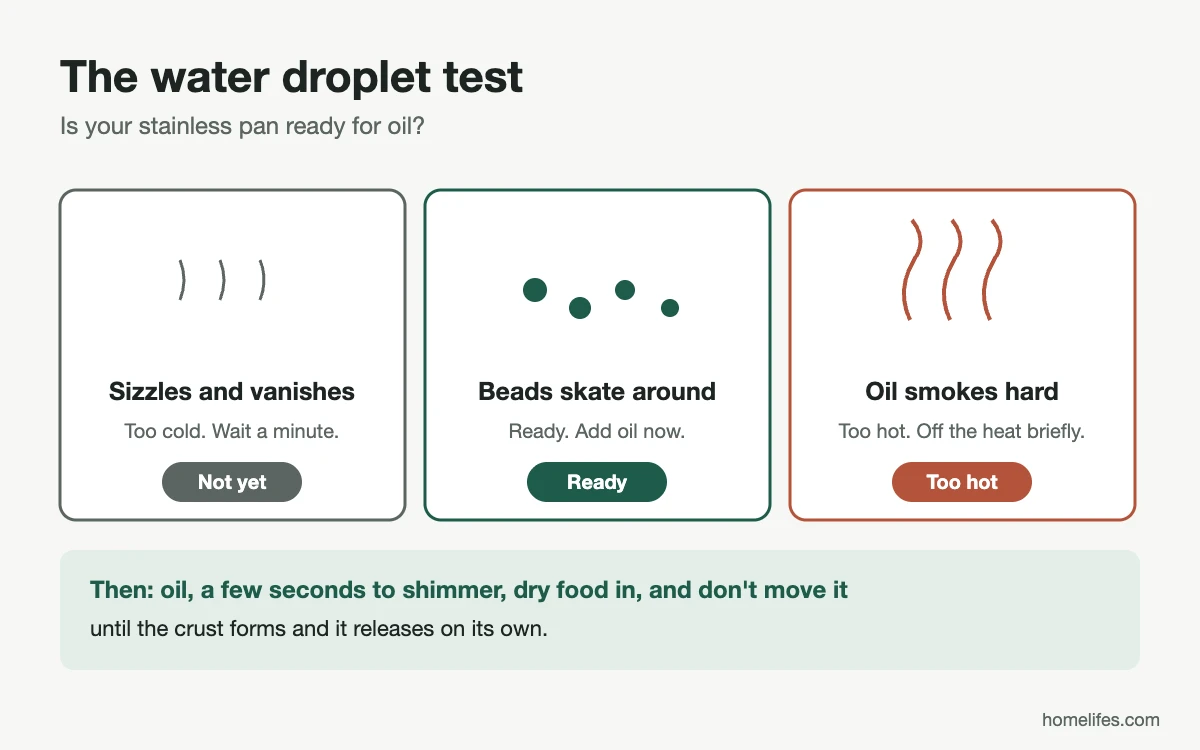
Heat the empty pan on medium for two or three minutes, then flick in a few drops of water.
- They sizzle and evaporate: not hot enough yet. Wait another minute.
- They form beads that skate around the pan: it’s ready. This is the moment to add oil.
- The oil smokes heavily as soon as it goes in: too hot. Take it off the heat for a minute.
Wipe out the water, add a thin layer of oil, give it a few seconds to shimmer, then add the food.
Four habits that stop the sticking
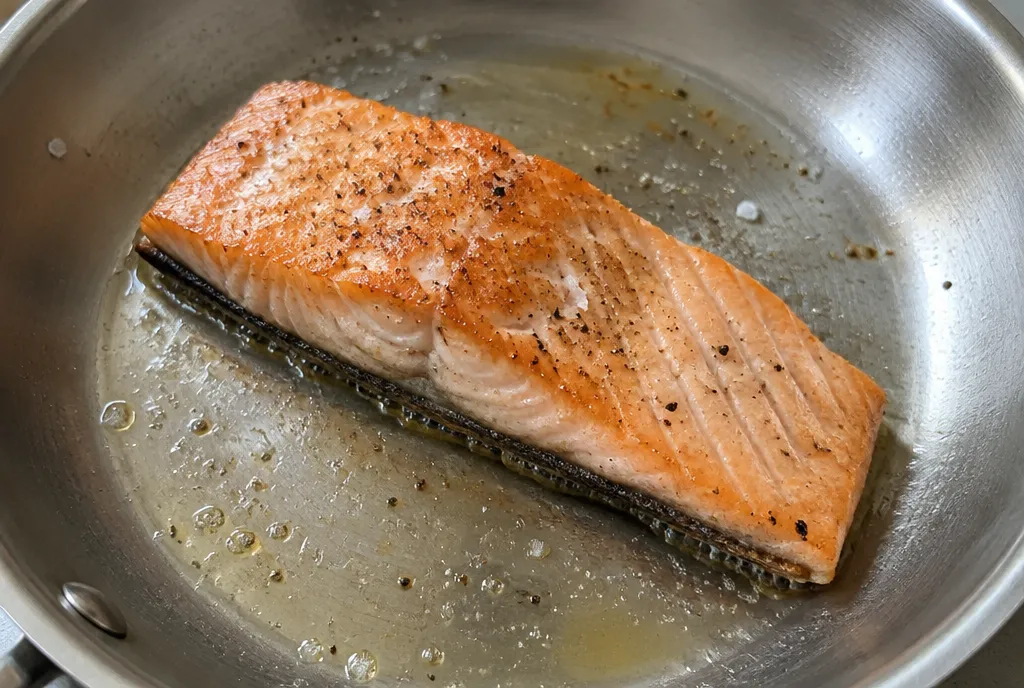
- Dry the food. Pat meat and fish with kitchen roll. Water on the surface steams instead of searing.
- Take the chill off thick cuts. Ten to fifteen minutes out of the fridge helps them cook evenly instead of cooling the pan sharply.
- Don’t crowd the pan. Too much food at once drops the temperature and everything stews.
- Wait for the release. Leave it alone. When the crust has formed, a gentle nudge with a thin turner will free it. If it resists, give it another minute.
Eggs are the hardest test
Eggs are the food most likely to stick, because they’re mostly protein and cook quickly. Use slightly lower heat than for meat, a little more fat, and let the white set before you touch it. If you want effortless eggs every morning, a small non-stick pan for eggs alongside your stainless one is a perfectly sensible setup.
Getting stuck-on food off
| Problem | What to do |
|---|---|
| Browned bits after cooking | Deglaze while hot with a splash of water, stock or wine, and scrape. That’s your sauce. |
| Burnt-on residue | Fill with hot water and a little washing-up liquid, simmer for a few minutes, then scrub |
| Rainbow or blue tint | Heat discolouration. Harmless, and a stainless cleaner removes it |
| White chalky spots | Limescale from hard water. A splash of vinegar or a stainless cleaner shifts it |
One small habit worth keeping: add salt to cooking water once it’s boiling rather than when it’s cold. Undissolved salt sitting on the base can leave tiny pits over time.
What helps
Cleaning
Bar Keepers Friend original powder (250g)
Good for: rainbow discolouration, white water marks and stubborn residue, without scratching stainless when used as directed.
Not ideal if: you only need everyday washing; hot soapy water does that.
Paid link
Turning
MasterClass stainless steel fish slice
Good for: a thin, firm edge that slides under seared food. Metal tools are fine on uncoated stainless.
Not ideal if: you also cook in non-stick pans; use silicone for those.
Paid link
Quick answers
Should I season a stainless steel pan?
No. Seasoning is for cast iron and carbon steel. Stainless just needs proper preheating and a little fat.
Is stainless steel better than non-stick?
It’s better for searing, browning and pan sauces, and it lasts far longer. Non-stick is easier for eggs and delicate fish. Many kitchens use one of each.
For the other half of that setup, read why your non-stick pan stopped being non-stick, and for cast iron, why it keeps rusting.