Our pick
Victorinox Swiss Classic chef’s knife (18cm)
Why we picked it
- Sharp, light and easy to control for everyday chopping
- 18cm suits most hands and most chopping boards
- Affordable enough to replace rather than mourn
Worth knowing
- Lighter than forged German knives, which some people prefer
- Hand-wash it to keep the edge and handle in good shape
Paid link
Open most kitchen drawers and you’ll find a block of ten or fifteen knives, most of them barely used, and one battered favourite that does all the work. That favourite is the clue.
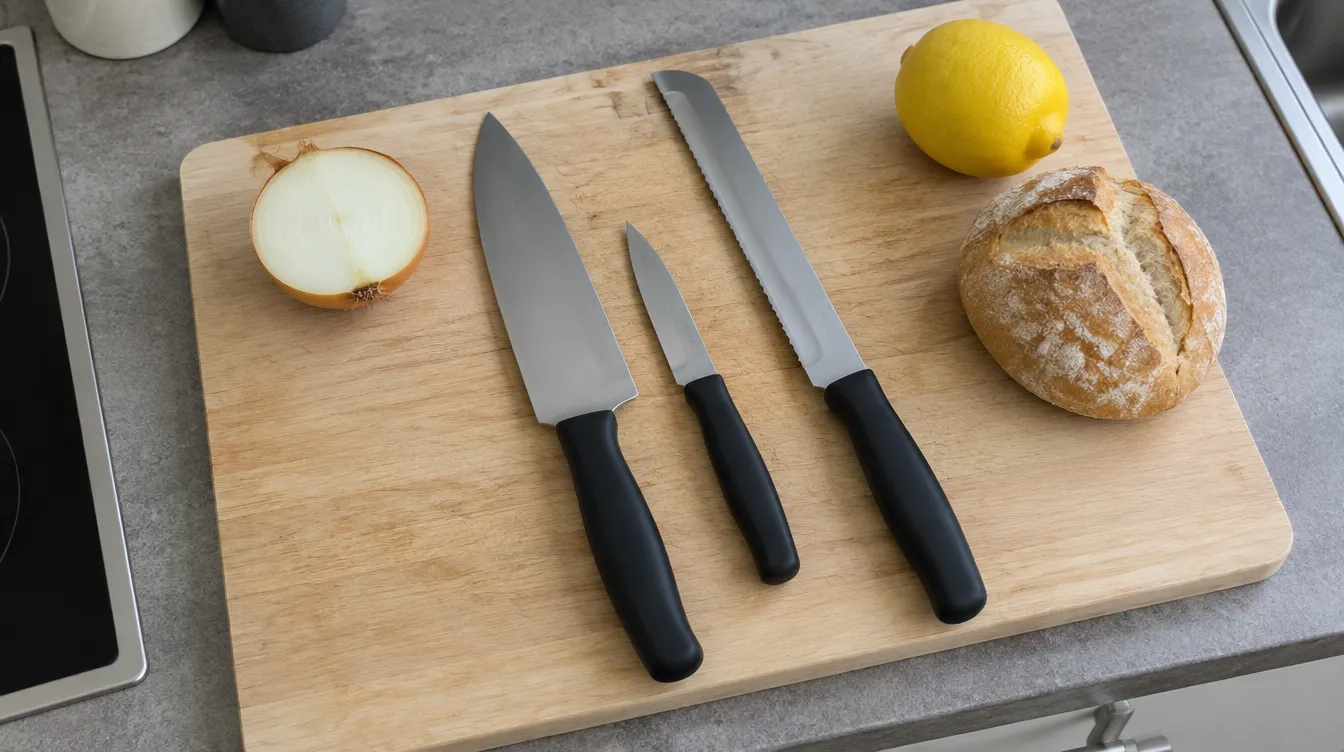
The core three
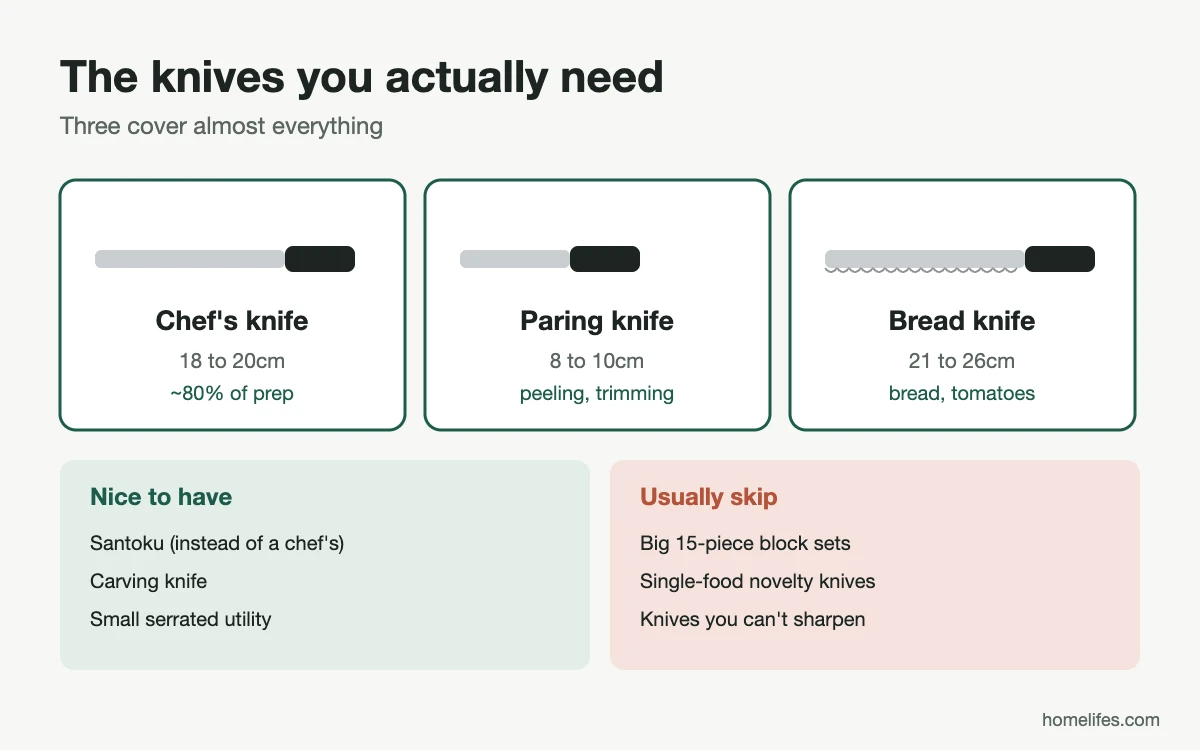
| Knife | Size | What it does |
|---|---|---|
| Chef’s knife | 18 to 20cm | Chopping, slicing, dicing. Around 80% of all prep. |
| Paring knife | 8 to 10cm | Peeling, trimming, small precise jobs in the hand. |
| Serrated bread knife | 21 to 26cm | Bread, tomatoes, anything with a tough skin and soft inside. |
With these three you can cook almost anything. Spend most of your budget on the chef’s knife, because it’s the one you’ll use every day.
What to look for
- Comfort first. Hold it if you can. The handle should feel secure, and the knife balanced rather than blade-heavy or handle-heavy.
- Blade length that suits your board. A 20cm blade on a small board feels clumsy; 18cm is a good middle ground.
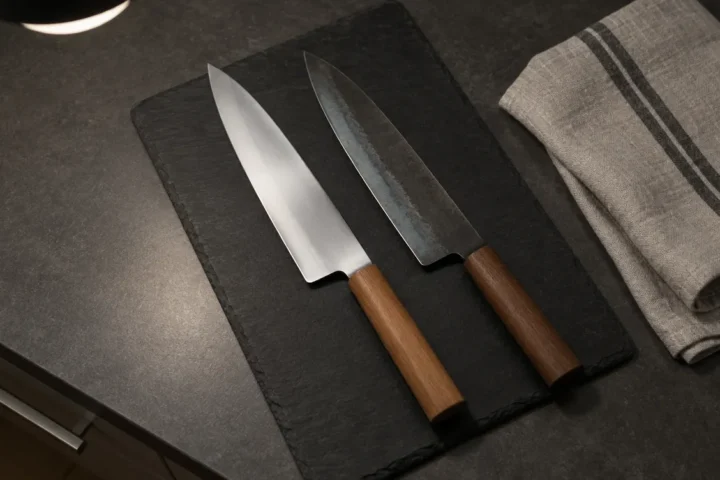
- Steel you can sharpen. Harder Japanese steels hold an edge longer but chip more easily. Softer European steels are more forgiving. Our sharpening guide explains the difference in angles.
Worth adding later
- A santoku, if you prefer a shorter, flatter blade to a curved chef’s knife. It’s an alternative, not an addition.
- A carving knife, if you roast joints often.
- A small serrated utility knife for tomatoes and sandwiches.
What to skip
Large block sets, which pad the count with knives you won’t use and often use cheaper steel throughout. Novelty knives for single foods. Steak knife sets, unless you actually serve steak often. And any knife that can’t be sharpened properly.
Storing them so they stay sharp
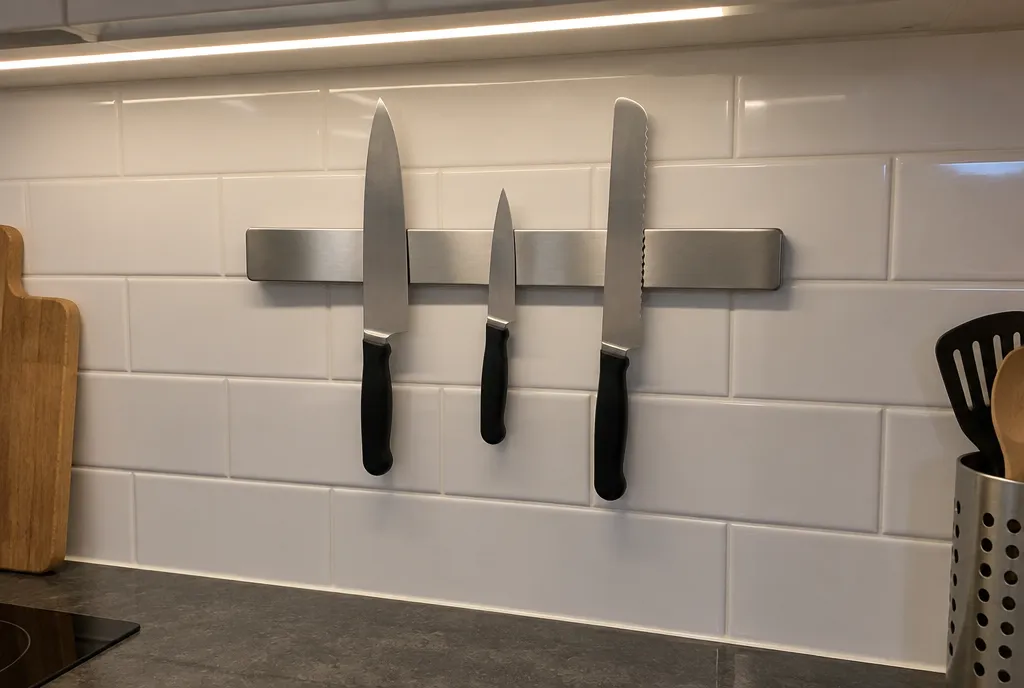
Loose in a drawer is the fastest way to blunt a good knife. A magnetic strip keeps blades apart and in view; a block or blade guards work too. Cut on wood or plastic, never glass or stone, and wash and dry knives by hand straight after use. Our chopping board guide covers which surfaces are kindest to an edge.
Completing the set
Paring
Victorinox Swiss Classic paring knives (2 pack)
Good for: peeling and trimming. Cheap enough that having two means one is always clean.
Not ideal if: you do all your small jobs with the chef’s knife already.
Paid link
Bread
Victorinox Swiss Classic bread knife (21cm)
Good for: everyday loaves and tomatoes. For big sourdough, see our bread knife guide.
Not ideal if: you mostly buy very wide bakery loaves.
Paid link
Storage
LARHN stainless magnetic knife strip (40cm)
Good for: keeping blades apart and edges protected, with screws included for wall fixing.
Not ideal if: you rent and can’t drill; use a block instead.
Paid link
Quick answers
Do I need an expensive knife?
No. A well-made mid-priced knife that you keep sharp will outperform an expensive one that’s blunt.
Chef's knife or santoku?
Try both if you can. Chef’s knives suit a rocking motion; santokus suit straight up-and-down chopping. Pick the one that feels natural.