Our pick
Silicone soup freezer moulds with lids (4 pack, 500ml)
Why we picked it
- Freezes soups, stews and sauces in neat single portions
- Pop out a block and stack them in a bag to save space
- Lids keep air out, which helps prevent freezer burn
Worth knowing
- Fill only to the line; liquids expand as they freeze
- Wash and dry them fully before the next batch
Paid link
Half a loaf, last night’s chilli, a bag of spinach that won’t be eaten in time. The freezer can rescue all of them, but only if they go in the right way.
The freezer is a pause button
Freezing doesn’t kill bacteria. It stops them growing while the food is frozen. So food comes out in the same condition it went in, which is why it pays to freeze things fresh rather than on their last day. The Food Standards Agency recommends keeping your freezer at around −18°C.
What freezes well, and what doesn’t
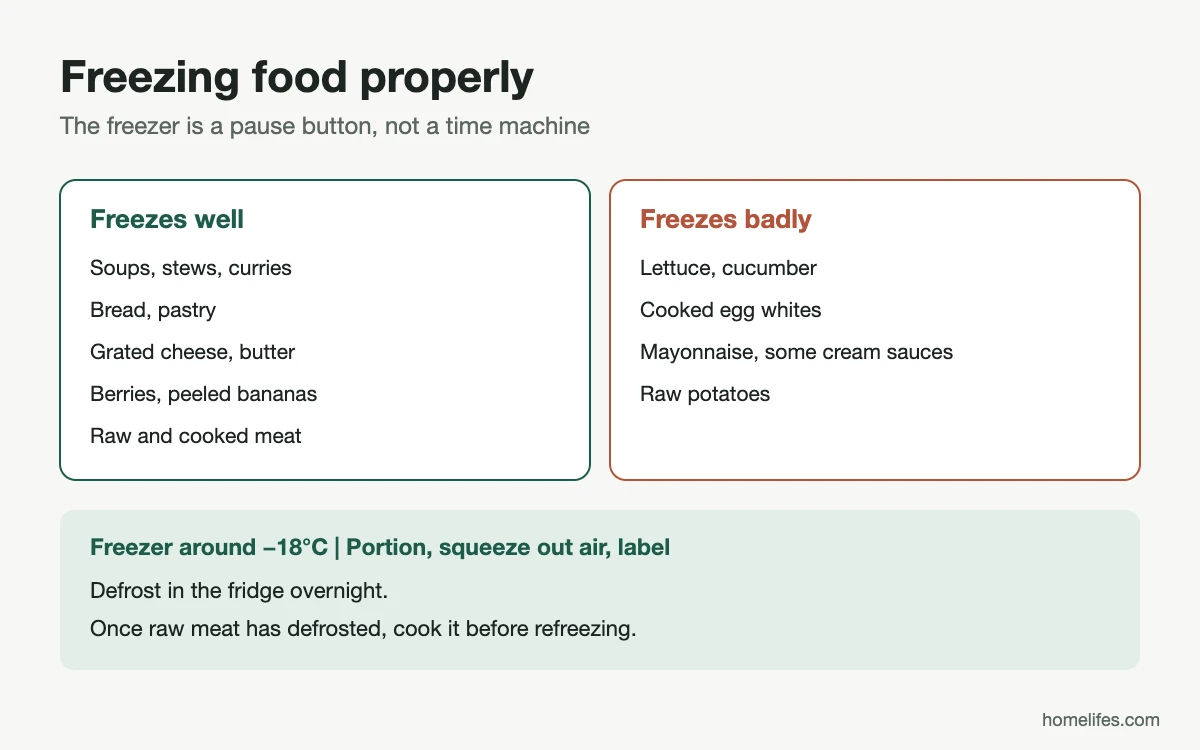
| Freezes well | Freezes badly | Why |
|---|---|---|
| Soups, stews, curries, chilli | Lettuce, cucumber, radishes | High-water salad goes limp and watery |
| Bread, rolls, pastry | Cooked egg whites | Turn rubbery |
| Grated hard cheese, butter | Mayonnaise, some cream sauces | Can separate or split |
| Berries, peeled bananas, herbs in oil | Raw potatoes | Texture goes grainy and grey |
| Raw and cooked meat and fish | Soft fresh herbs on their own | Blacken, though fine for cooking |
How to freeze it
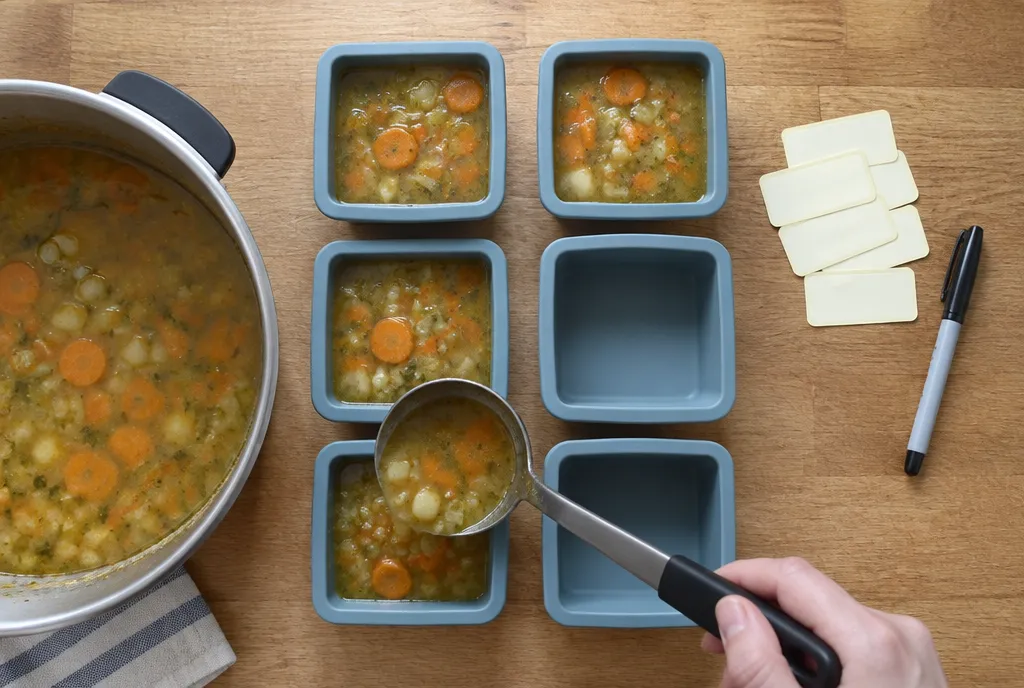
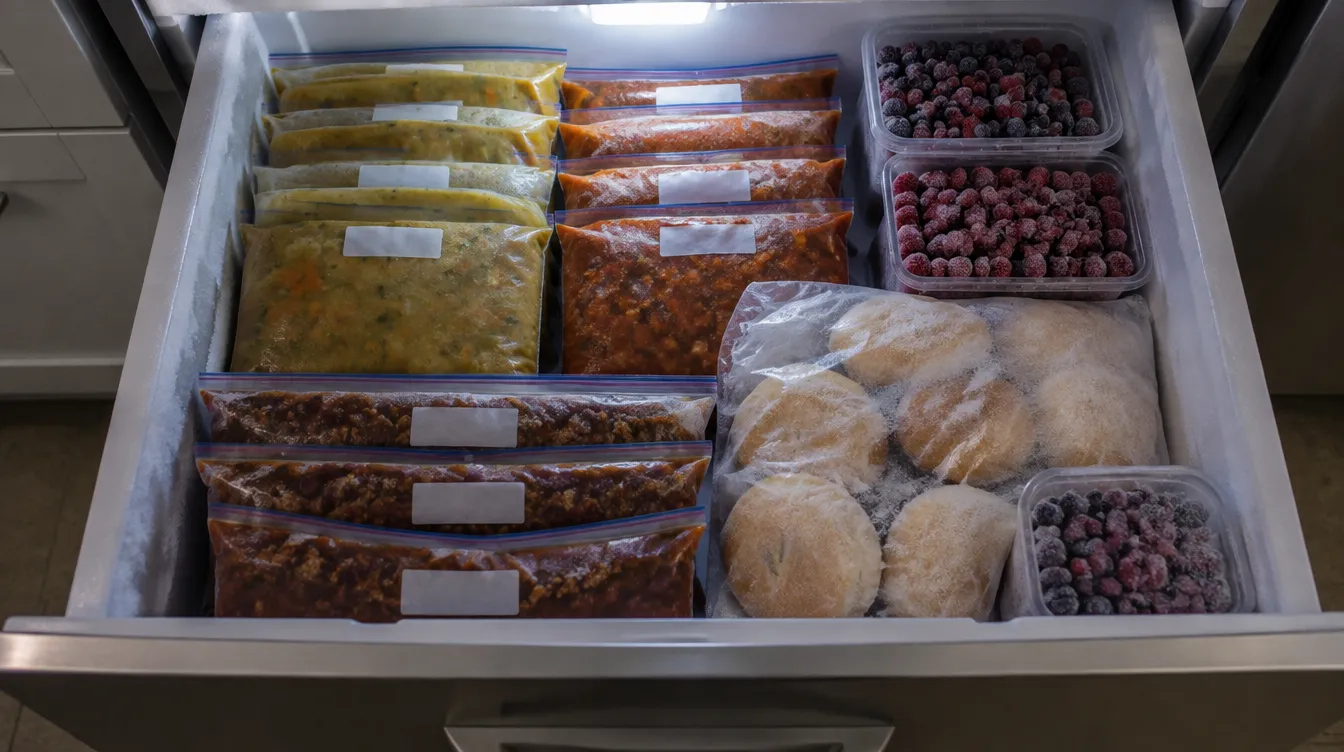
- Cool cooked food quickly, then freeze it. Don’t put anything hot in the freezer.
- Portion it. Small, flat portions freeze and defrost faster, and you only take out what you need.
- Squeeze the air out. Air is what causes freezer burn, those dry, greyish patches.
- Label everything with what it is and the date.
How long does it keep?
In a freezer at −18°C food stays safe for a long time, but quality slowly drops. As a rough guide, aim to use most home-frozen food within three to six months. Older items aren’t dangerous; they just taste flatter and drier.
Defrosting safely
The FSA’s advice is to defrost in the fridge, usually overnight, so the food never sits in the warm temperature range where bacteria multiply. Small portions can be defrosted in the microwave and then cooked straight away. Once raw meat or fish has defrosted, cook it before freezing it again.
If the power goes off, keep the door shut. According to Irish food safety guidance, a full freezer usually keeps food frozen for about two days, a half-full one for about one.
Freezer helpers
Bags
Amazon 1 litre freezer bags with glide closure (20 pack)
Why it works: lie portions flat to freeze fast and stack like files.
Less useful if: you prefer reusable containers.
Paid link
Labels
Removable freezer labels (100 pack)
Why it works: write the contents and date; they peel off cleanly for reuse of the container.
Less useful if: you use a marker directly on bags.
Paid link
Check
Salter fridge and freezer thermometer
Why it works: confirms your freezer is actually running at around −18°C.
Less useful if: your freezer already shows a reliable temperature readout.
Paid link
For bread specifically, see why your bread goes stale or mouldy so fast, and for the fridge, where food should live.