Our pick
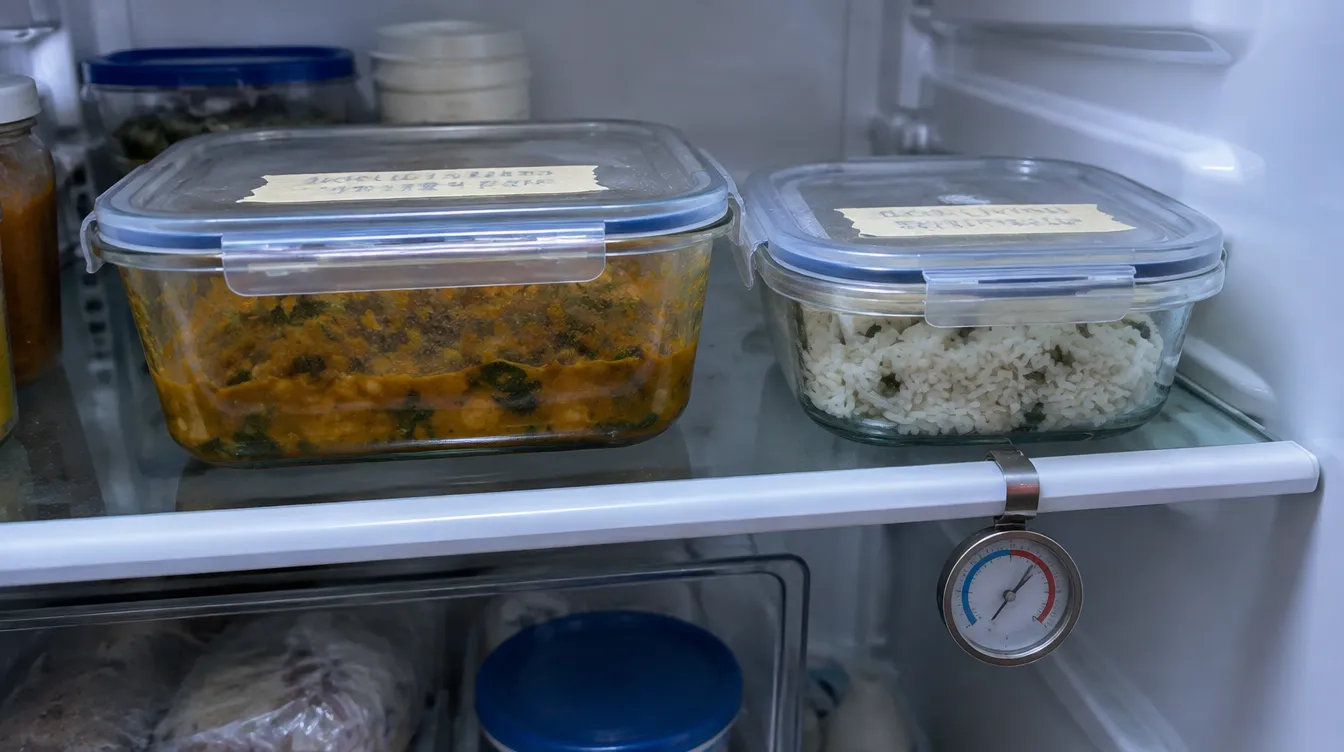
Salter fridge and freezer thermometer
Why we picked it
- Shows the real temperature of the fridge, which the dial doesn’t
- Waterproof and sturdy, so it lives in the fridge happily
- Works in the freezer too
Worth knowing
- Analogue dials need a moment to settle after the door has been open
- Move it between shelves to find the warmest spot
Paid link
A tub of last night’s curry sits at the back of the fridge. Is it still fine on day three? Day four? The honest answer from UK food safety bodies is shorter than most of us assume, and the rules for rice are shorter still.
This is the cheat sheet. The advice comes from the Food Standards Agency and the NHS, and where a figure is a quality rule of thumb rather than a safety limit, I’ve said so.
The leftover clock
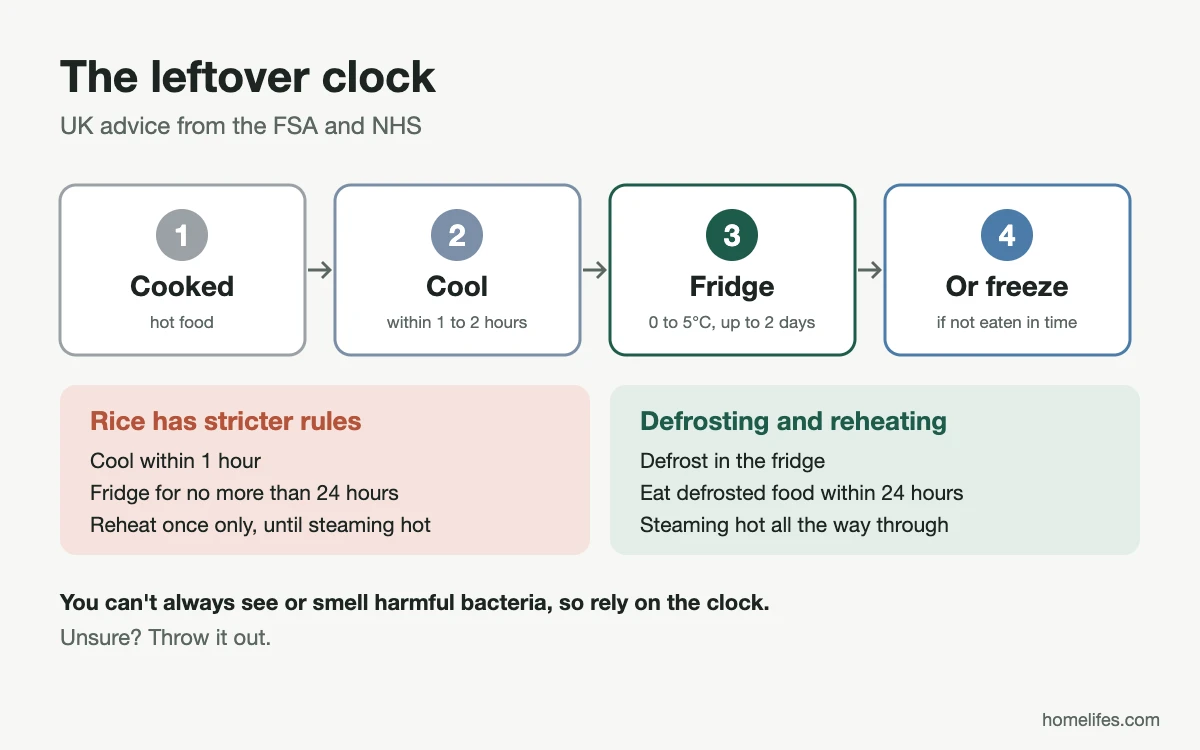
- Cool it fast. Cool cooked food, ideally within one to two hours, then refrigerate or freeze it. The NHS suggests putting food in an airtight container and running cold water over it to speed things up.
- Get it covered and chilled. The FSA says your fridge should be between 0 and 5°C, and your freezer around minus 18°C.
- Use it within two days if it’s in the fridge, according to NHS guidance. If you won’t manage that, freeze it.
- Reheat until steaming hot all the way through, not just at the edges.
- Don’t keep reheating. Reheat once only. That’s firm advice for rice, and sensible practice for other leftovers.
Why rice gets its own rule
Uncooked rice can carry bacterial spores that survive cooking. If cooked rice sits warm, they can grow, and some produce toxins that reheating doesn’t destroy. That’s why UK advice is tighter: cool rice within one hour, keep it in the fridge, eat it within 24 hours, and never reheat it more than once.
How long things keep
| Leftover | In the fridge (0 to 5°C) | Notes |
|---|---|---|
| Cooked rice | No more than 24 hours | Cool within one hour. Reheat once only, until steaming hot |
| Soups, stews, curries, chilli | Up to 2 days | Cool in shallow containers so they chill quickly |
| Cooked meat and poultry | Up to 2 days | Keep it covered, and away from raw meat |
| Cooked fish | Up to 2 days | Eat cold or reheat until steaming hot |
| Cooked pasta and potatoes | Up to 2 days | Cool quickly. Reheat until steaming hot |
| Takeaway leftovers | Up to 2 days | Treat takeaway rice exactly like home-cooked rice |
| Defrosted food | Within 24 hours | Defrost in the fridge, and cook or eat it within a day |
Cooling methods compared
| Method | How | Best for |
|---|---|---|
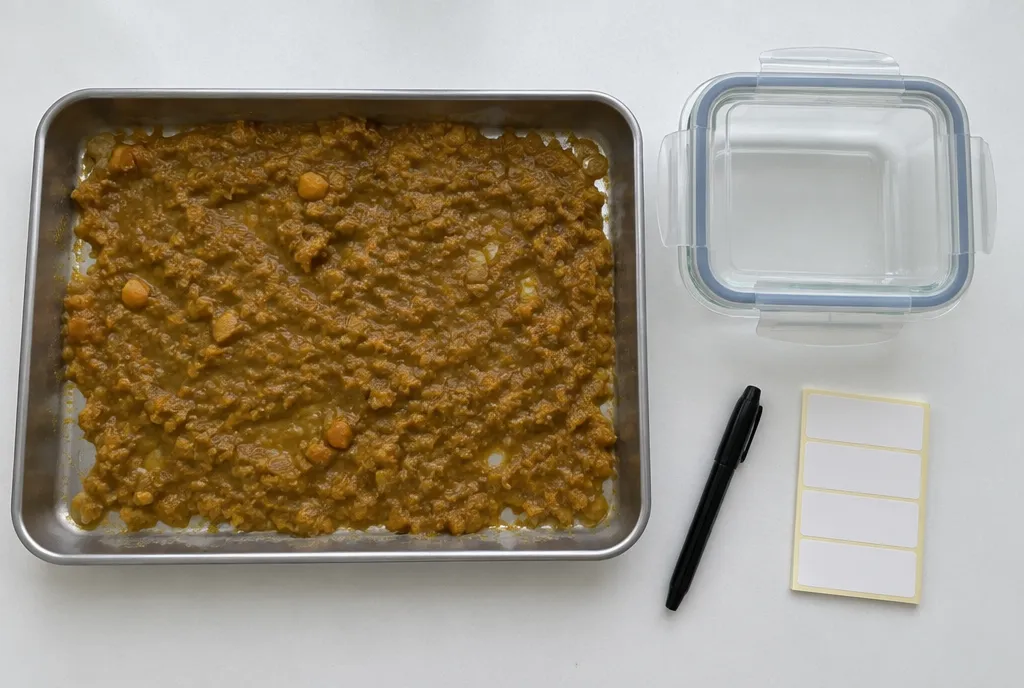
| Shallow containers | Spread the food thinly so heat escapes quickly | Soups, stews, curries |
| Cold water bath | Put the sealed container in cold water in the sink | Speeding up any container |
| Smaller portions | Split a big batch into several tubs | Large pots of food |
| Spread on a tray | Spread rice thinly so it cools within the hour | Rice |
What not to do is put a big pot of hot food straight into the fridge. The FSA’s advice is not to put hot or warm food in the fridge, because it raises the temperature around everything else. Cool it first, then chill it.
Using the freezer
Freezing is the escape route when you won’t finish something in two days. Divide it into portions, cool it first, label it with the date, and defrost in the fridge. As a quality rule of thumb, home-frozen leftovers are best within about three months. That isn’t a safety cut-off. It’s when texture and flavour start to fade. For more on what freezes well, see freezing food properly.
Reheating, method by method
| Method | How to do it well |
|---|---|
| Microwave | Stir halfway, let it stand, and check the centre |
| Hob | Stir often and bring to a simmer until steaming hot |
| Oven | Cover it and reheat until hot all the way through |
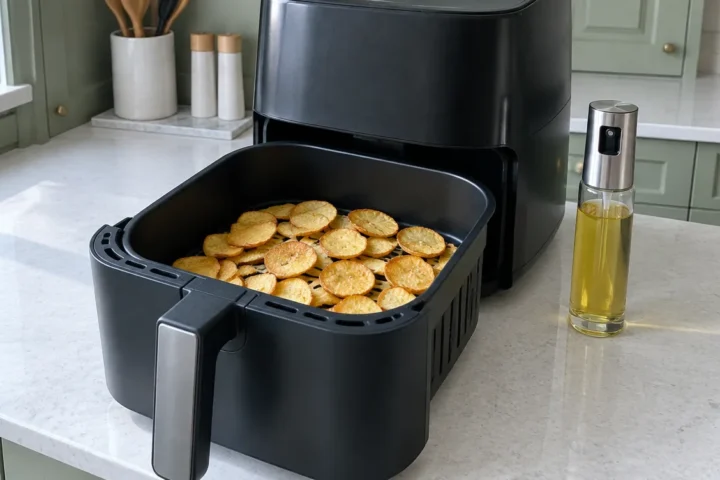
| Air fryer | Good for crisp items, but check the middle is hot |
Whichever you use, the test is the same: steaming hot all the way through, not just at the edges.
A worked example: the Sunday roast
Cook on Sunday and cool the leftovers by mid-afternoon, so they’re in the fridge within two hours. Monday’s sandwiches are fine. Tuesday is the last day for the fridge, so eat it then or freeze it on Monday. Anything left on Wednesday is past the two-day mark, so it goes in the bin. Putting the day on the lid makes this easy to follow.
Smell and appearance aren’t a safety test
Harmful bacteria don’t always change how food looks or smells, so a sniff test isn’t enough. The dates you put on the lid, and the two-day rule, are the reliable guide. If you’re unsure, throw it out.
Extra care for some people
Babies, pregnant women, older people and anyone with a weakened immune system are more at risk from food poisoning. For babies, NHS advice is to throw away half-eaten portions of prepared food rather than save or reheat them.
Habits that make it easy
- Put a date on every container, so you aren’t guessing.
- Keep the fridge at 5°C or below, and check it with a thermometer.
- Use shallow containers so food cools faster.
- Read the fridge shelf guide so leftovers aren’t sitting in the warmest spot.
- If you reheat in the microwave, stir and check the centre. Our guide to why microwaves heat unevenly shows how.
What helps
Containers
Glass food containers with airtight lids (10 pack)
Why it works: see-through, so leftovers don’t get forgotten at the back, and they go from fridge to microwave.
Less useful if: you mostly freeze in bags.
Paid link
Labels
Removable freezer labels (100 pack)
Why it works: write the contents and the date, and peel off cleanly later.
Less useful if: you write directly on the container with a marker.
Paid link
Leftovers: common questions
Can I eat leftovers on day three?
UK guidance is to eat fridge leftovers within two days, and cooked rice within one. Freeze what you won’t finish in time.
Is it safe to eat cold rice?
Rice can be eaten cold if it was cooled quickly and kept in the fridge. Eat it within 24 hours.