Our pick
Tefal Comfort Max stainless steel 3-piece pan set
Why we picked it
- Listed as induction compatible, so there’s no guesswork about the base
- Stainless steel with glass lids, which suits everyday cooking
- A matching set means lids and sizes that work together
Worth knowing
- Check the base diameter against your hob zones before you buy
- Stainless steel can stick if you rush it, so learn the technique first
Paid link
You’ve moved house, or your old hob has finally given up, and the new one is induction. The pans look fine. You put one on, switch it on, and nothing happens. Or it works, but the base rocks and the heat is patchy.
Induction is fast and precise, but it’s fussy about cookware. The good news is that you can check almost everything yourself in about a minute.
Why induction is fussy
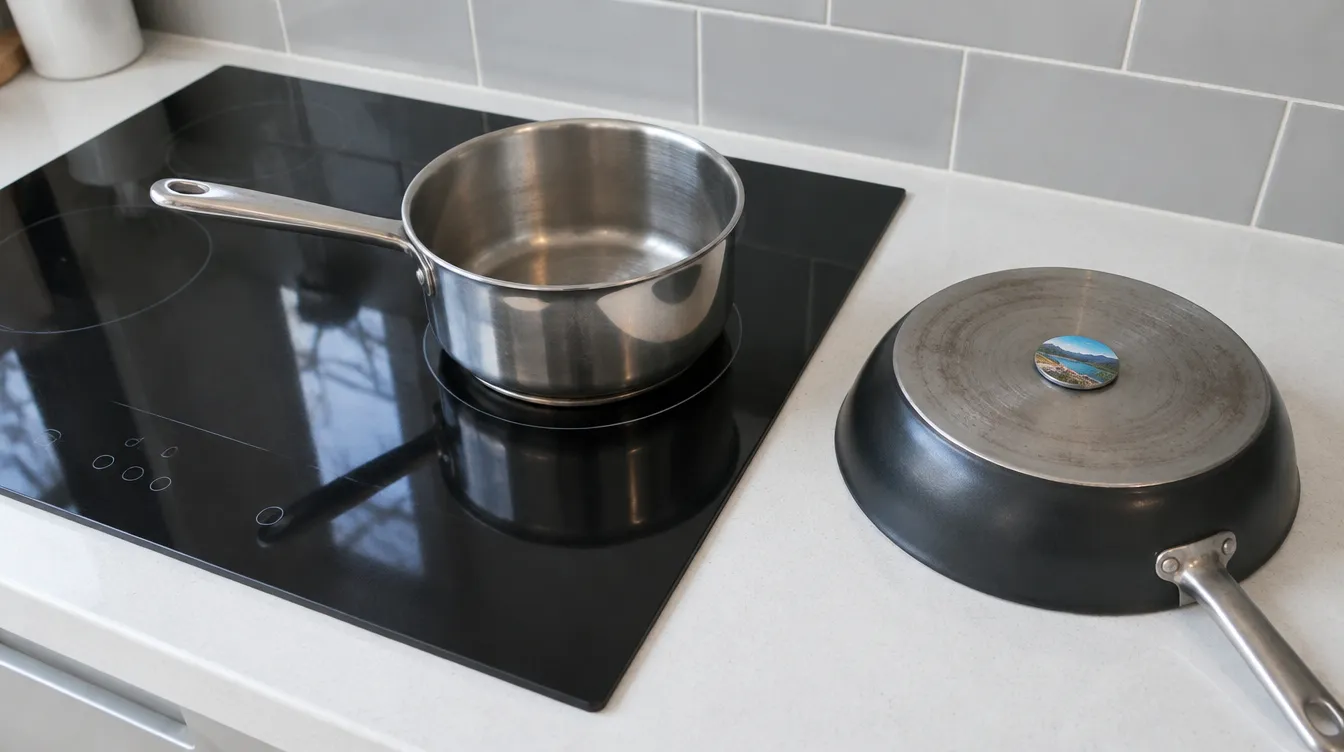
An induction hob has a coil under the glass that creates a magnetic field. That field heats the base of a magnetic pan directly. A pan that isn’t magnetic, or doesn’t sit flat on the glass, has nothing for the field to work on, so it heats poorly or not at all.
The three checks
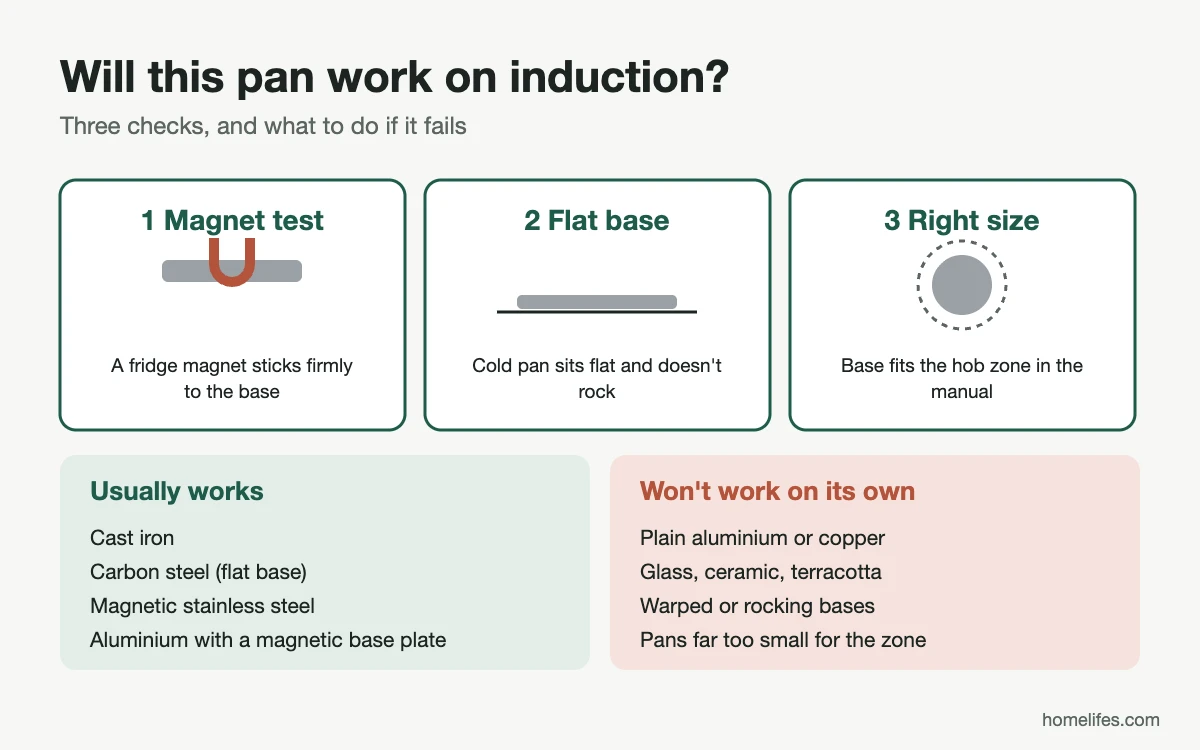
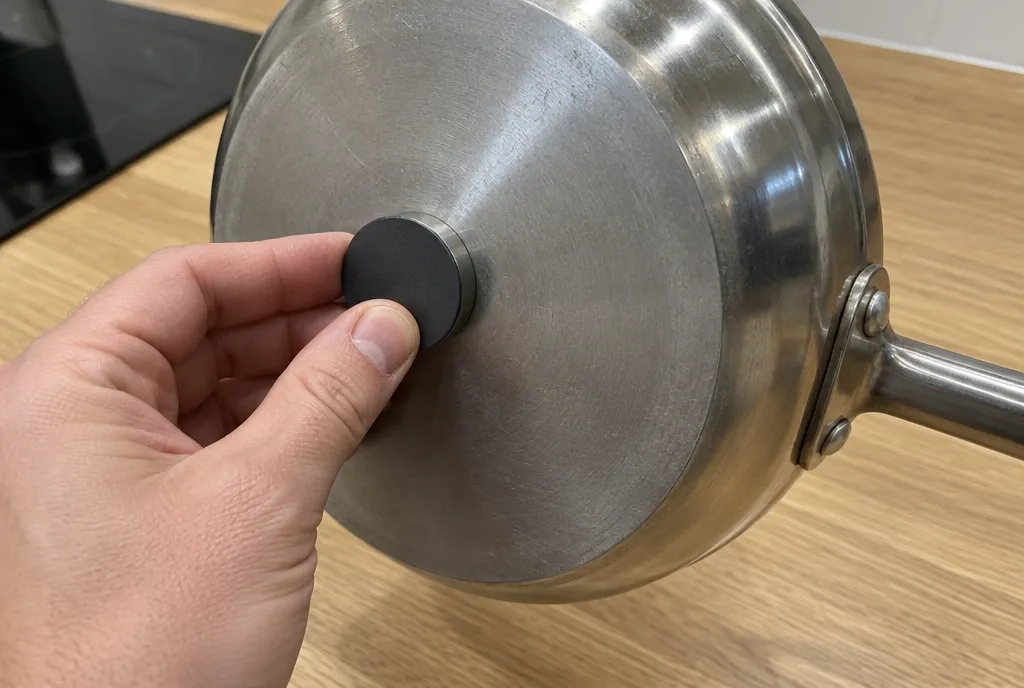
- The magnet test. Hold a fridge magnet against the base. Which? says that if it sticks, the pan will likely work on induction. If it sticks only weakly, the pan is unlikely to perform well, according to the cookware maker Stellar.
- A flat base. Put the cold pan on a flat surface and press the rim. If it rocks, it won’t make good contact with the glass. Both Which? and Stellar point to a flat base as essential.
- The right size for the zone. Check your hob’s manual or the markings on the glass for the minimum and maximum pan diameter. A small pan on a large zone, or the reverse, may heat poorly or not register.
The magnet test catches the material. It doesn’t catch a warped base or a size mismatch, which is why you need all three.
What works and what doesn’t
| Material | On induction? | Note |
|---|---|---|
| Cast iron | Yes | Magnetic and heavy. Lift it rather than sliding it, to protect the glass |
| Enamelled cast iron | Usually | Check each piece, as brands vary |
| Carbon steel | Yes, if the base is flat | Pans with warped bases are the usual problem |
| Stainless steel | Depends | It needs a magnetic base. Some grades won’t stick, so test every pan |
| Aluminium | Only with a magnetic base plate | Plain aluminium has nothing for the field to heat |
| Copper | Only with a magnetic base | Look for the induction symbol or test it |
| Glass, ceramic, terracotta | No | Not magnetic, whatever the coating |
If your pans don’t pass
The simplest answer is to replace them gradually, starting with the pans you use most. If you want to keep a favourite, an induction adapter plate sits between the pan and the hob and heats up to pass heat on. Which? lists adapters as an option, and they work, but they add a step and are best treated as a stopgap rather than a permanent fix.
Protecting the glass
Induction hobs are glass, and glass scratches. Lift pans rather than dragging them, keep bases clean, and wipe the hob when it’s cool. A hob protector sheet is a sensible extra if you cook with heavy or rough-bottomed pans, but follow the hob maker’s instructions about using one.
How cooking changes on induction
Induction heats the pan quickly and responds fast when you turn it up or down, so it rewards a lighter hand. Start lower than you would on a radiant electric ring, and give a heavy pan a minute to come up to temperature. Thin pans can heat unevenly or warp, which is another reason to choose a thick, flat base.
Buying pans for induction
- Look for the induction symbol on the base or the box, then still do the magnet test in the shop if you can.
- Check the base is thick and flat. A thin, light base can warp when it heats.
- Test every piece in a set, including the small pans and lids you might use for tricky jobs.
- Think about how you cook. Carbon steel and cast iron both work, and our guides to seasoning carbon steel and stopping cast iron rusting cover the care. If you prefer stainless, why food sticks to stainless steel pans explains how to cook in it.
A quick starter checklist
- Test every pan you own with a magnet, and set aside the ones that fail.
- Check the base of each keeper for rocking, with the pan cold.
- Look up your hob’s minimum and maximum pan size in the manual.
- Decide whether to replace the failures now or one at a time.
Things to consider
Cast iron
Lodge pre-seasoned cast iron skillet (26cm)
Good for: searing and oven finishing on induction, with a base that’s magnetic by nature.
Not ideal if: you want something light, or you slide pans across the glass a lot.
Paid link
Keeping an old pan
Kuhn Rikon induction adapter plate (19cm)
Good for: using one non-induction favourite on an induction hob while you replace the rest.
Not ideal if: you want a long-term solution. A compatible pan is better.
Paid link
Protecting the glass
Bake-O-Glide induction hob protector
Good for: helping prevent scuffs and scratches on the glass.
Not ideal if: your hob maker advises against protector sheets. Check the manual first.
Paid link
Induction pans: common questions
Can I use a wok on induction?
Flat-bottomed woks work well. A traditional round-bottomed wok may not make enough contact, even if it’s made of a magnetic material.
Is the magnet test enough?
It’s nearly enough for the material. It won’t spot a warped base or a pan that’s too small or large for the zone, so check those as well.