Our pick
Salter fridge and freezer thermometer
Why we picked it
- Shows the real temperature, which the dial on your fridge doesn’t
- Stainless and waterproof, so it lives happily inside
- Works in the freezer too
Worth knowing
- Analogue dials need a moment to settle after the door’s been open
- Move it between shelves to find the warm spots
Paid link
Milk turning before its date. Salad going slimy in two days. A mystery smell from the back. Most of it comes down to where things are kept, and a fridge that’s warmer than you think.
Get the temperature right first
Your fridge should run at 5°C or below. UK food safety guidance recommends between 0°C and 5°C, checked with a fridge thermometer, because the numbers on the dial aren’t a temperature. Don’t overfill it either: cold air needs room to circulate.
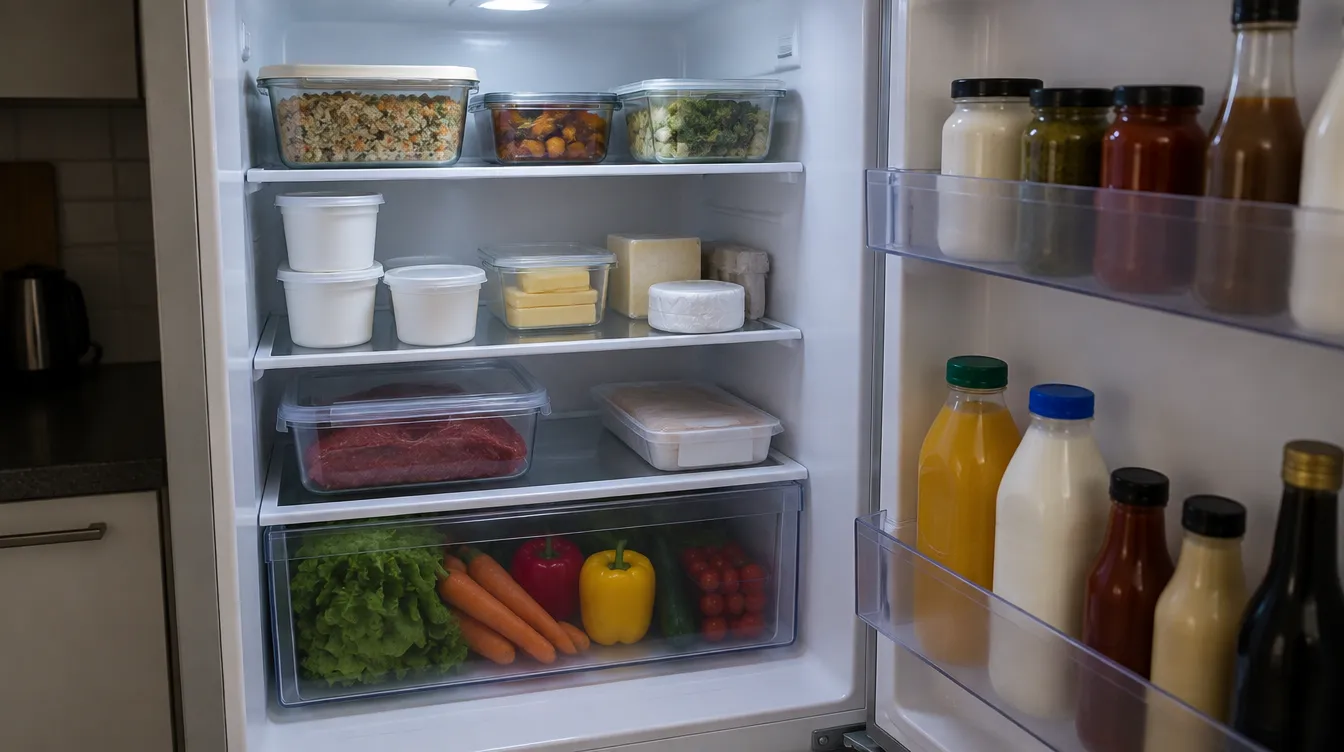
Shelf by shelf
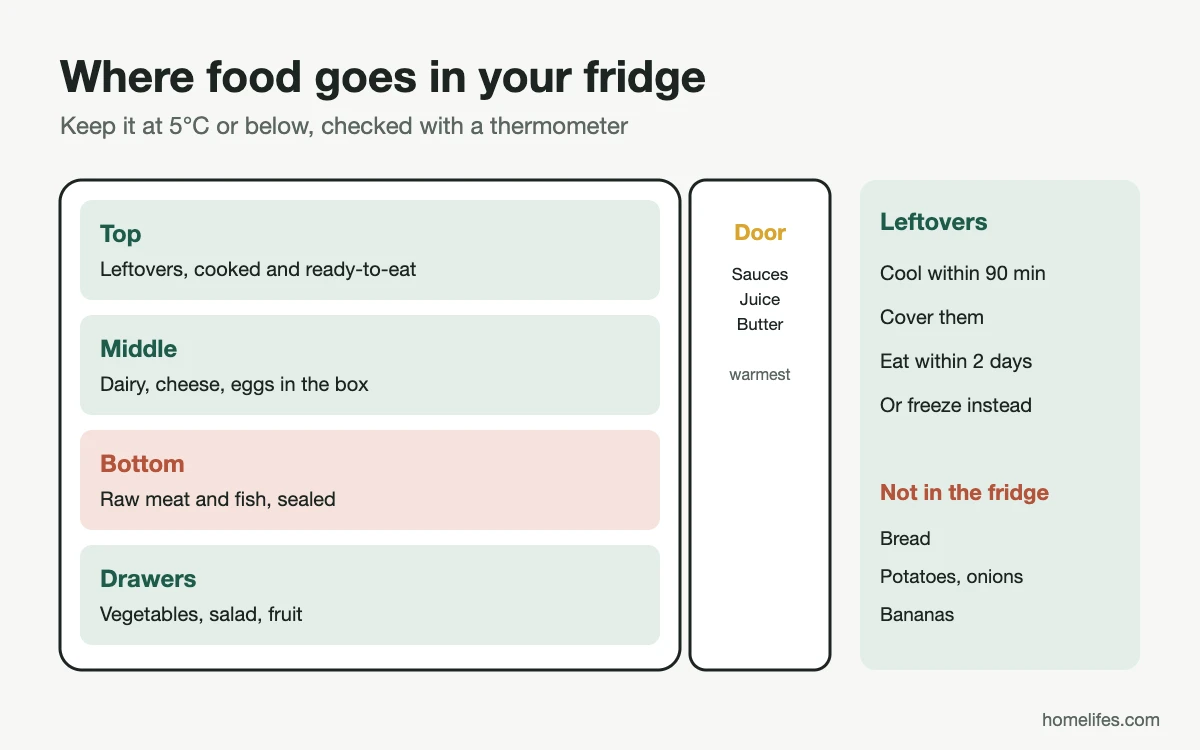
| Where | What goes there | Why |
|---|---|---|
| Top shelves | Leftovers, cooked meats, ready-to-eat food | Kept well away from raw meat juices |
| Middle shelves | Dairy, yoghurt, cheese, eggs in their box | Steady temperature away from the door |
| Bottom shelf | Raw meat, poultry and fish, sealed or covered | Usually coldest, and nothing below to drip onto |
| Salad drawers | Vegetables, salad and fruit that needs chilling | Higher humidity keeps them crisp |
| Door | Condiments, sauces, juice, butter | Warmest spot, as it swings open all day |
If you get through milk slowly, it often keeps better on a shelf than in the door.
Leftovers, the right way
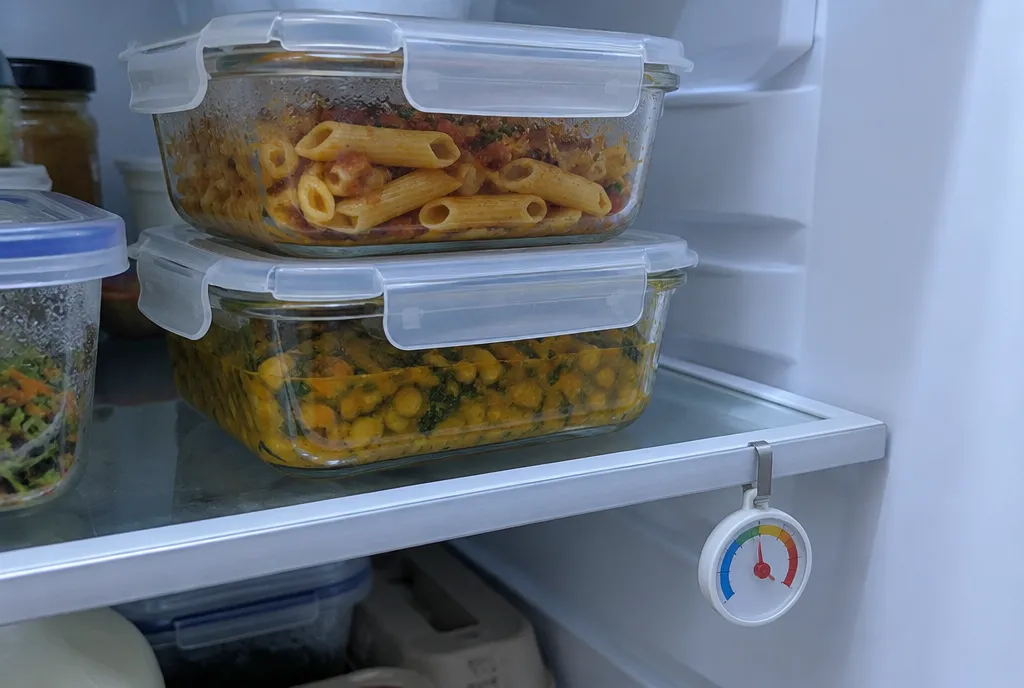
Cool leftovers as quickly as possible, ideally within 90 minutes, cover them and get them in the fridge, then eat them within two days. That’s the standard UK advice. If you won’t manage that, freeze them instead. Don’t put food in while it’s still hot, as it warms everything around it.
Use by or best before?
These two dates mean different things. A use by date is about safety: it’s found on foods that go off quickly, like meat, fish and many dairy products, and you shouldn’t eat them after it even if they look and smell fine. A best before date is about quality: the food is usually safe for a while afterwards, though it may not taste its best.
When you unpack the shopping, put anything with a near use by date at the front where you’ll see it. It’s the simplest way to waste less.
What doesn’t belong in the fridge
- Bread: it goes stale faster in the cold. Read why your bread goes stale or mouldy so fast.
- Potatoes and onions: a cool, dark cupboard suits them better.
- Bananas: the skins blacken in the cold, though the fruit inside is fine.
Storage that helps
Containers
Glass food containers with airtight lids (10 pack)
Why it works: see-through, so leftovers don’t get forgotten at the back, and they go from fridge to microwave.
Less useful if: you mostly freeze leftovers in bags.
Paid link
Organisers
Clear fridge organiser bins (4 pack)
Why it works: group small items so you can pull out a whole category at once and see what’s running low.
Less useful if: your fridge is small and the shelves are already full.
Paid link
Produce
Glass berry and salad keeper with colander (3 pack)
Why it works: lets produce drain and breathe, so berries and leaves last longer.
Less useful if: you buy fresh produce every day or two.
Paid link
Cooked too much? Freezing food properly explains what freezes well, and why your microwave heats unevenly helps with reheating it.
Quick answers
Can I put warm food in the fridge?
Let it cool first, ideally within 90 minutes, then refrigerate. Splitting a big pot into smaller containers helps it cool faster.
How often should I clean the fridge?
Wipe spills as they happen and give it a proper clean every month or two, checking dates as you go.