Our pick
Tala airtight glass spice jars (set of 5)
Why we picked it
- Silicone-sealed clip tops keep air and steam out
- Glass lets you see what’s running low
- Works in a cupboard or a drawer
Worth knowing
- Jars are larger than standard supermarket shakers
- Clear glass still needs a dark place to keep spices fresh
Paid link
You follow a curry recipe to the gram and it tastes of not very much. The cumin has lived in the rack next to the cooker since you moved in. The recipe was fine. The problem is where the spices live.
Try this first: the rub test
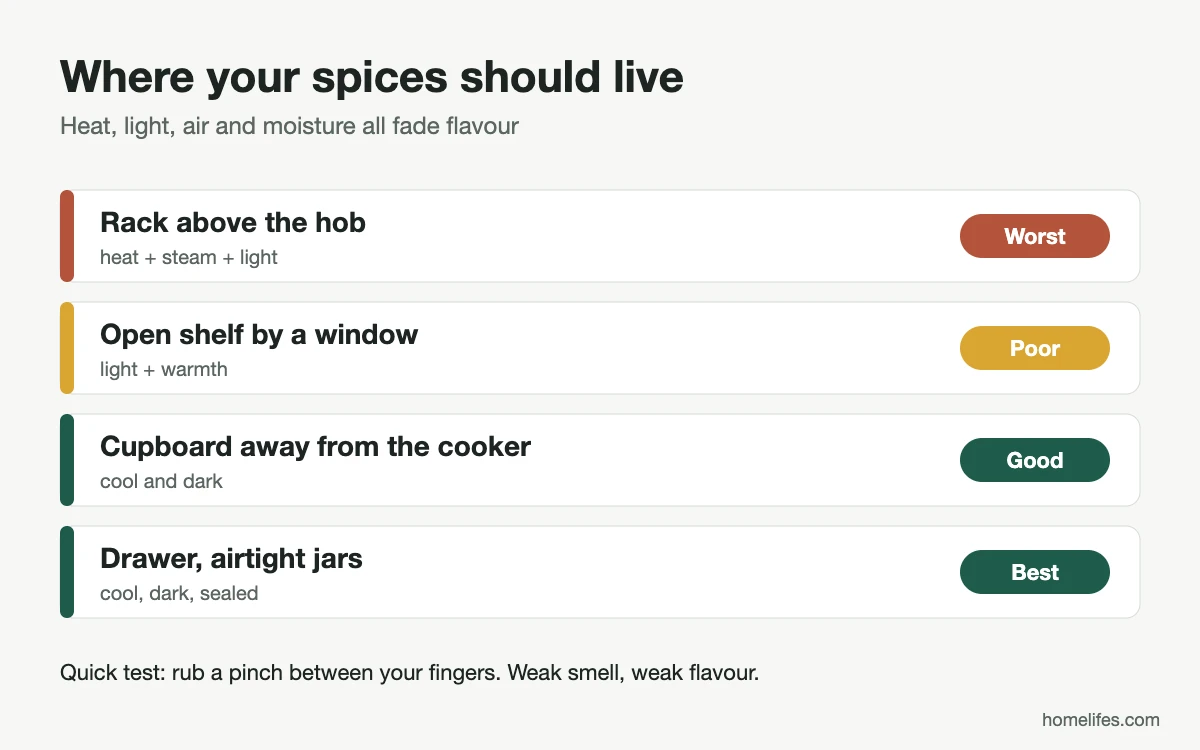
Tip a little into your palm, rub it between your fingers and smell it. A strong, distinct aroma means it’s still good. If you have to hunt for the smell, it will add colour to the dish and very little else. It takes ten seconds, and it’s worth doing for every jar before you buy anything new.
Why the hob is the worst spot
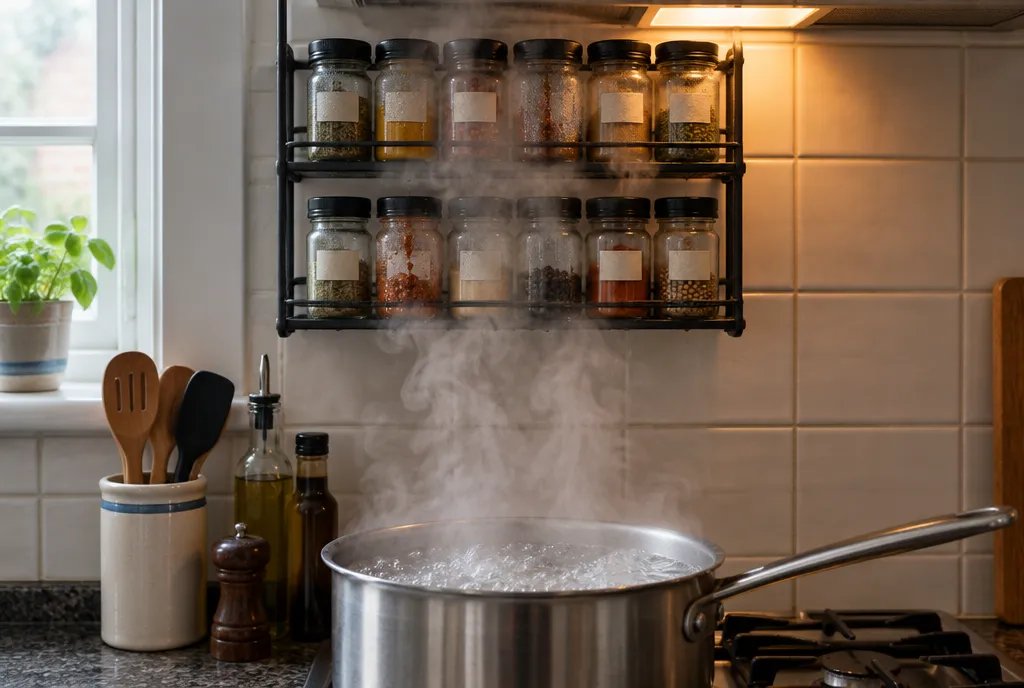
Most of a spice’s flavour comes from volatile oils, compounds that evaporate and break down over time. Four things speed that up: heat, light, air and moisture. A rack above the hob gets all four, every time you cook.
Steam also finds its way into jars that get opened over a pan, which is why spices kept there tend to clump into solid lumps.
Whole or ground?
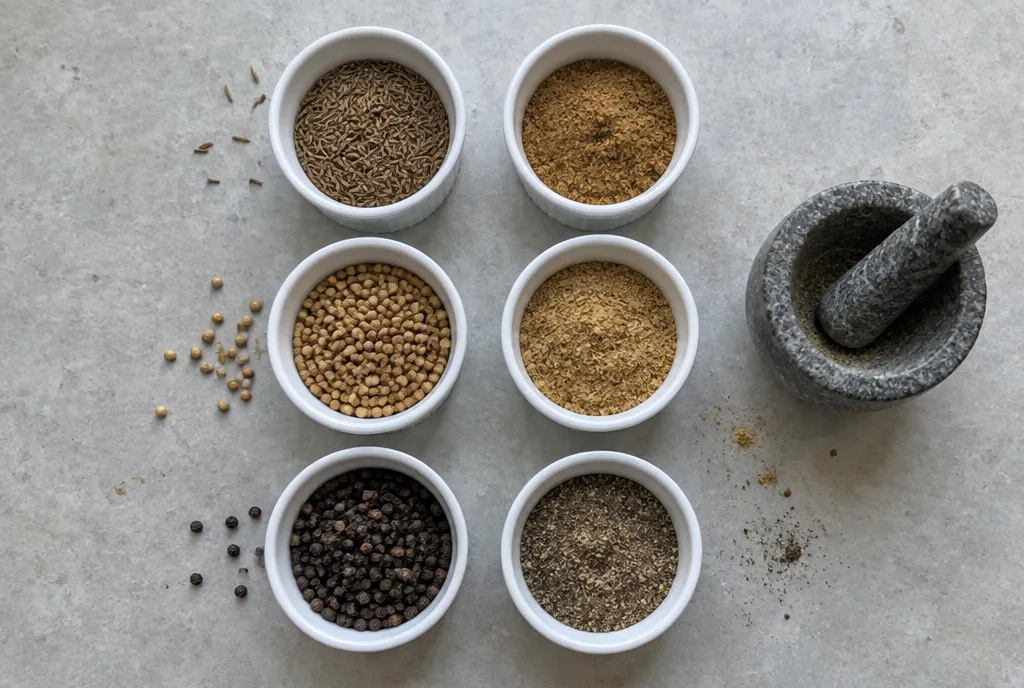
Ground spices have far more surface exposed to the air, so they fade much faster than whole seeds, pods and sticks. If you get through something often, like cumin, coriander or black pepper, buying it whole and grinding a little at a time makes a noticeable difference.
| Form | How quickly it fades | Best kept |
|---|---|---|
| Ground | Noticeably within months | Small jars, cool and dark, bought little and often |
| Whole seeds and pods | Much more slowly | Airtight jars, ground as needed |
| Dried herbs | Somewhere in between | Away from steam and sunlight |
Spices rarely become unsafe as they age. They just get weaker, which is why the rub test matters more than any date on the label.
Three ways to store them properly
In a cupboard
The rack
Joseph Joseph CupboardStore under-shelf spice rack
Why it works: fixes under a cupboard shelf and pulls down so the labels face you, using space that’s usually wasted.
Less useful if: your shelves are slippery or uneven. Some owners find the adhesive struggles, so check the surface first.
Paid link
The jars
Tala airtight glass spice jars (set of 5)
Why it works: silicone-sealed clip tops keep air out far better than most supermarket shakers.
Less useful if: your current jars already seal tightly.
Paid link
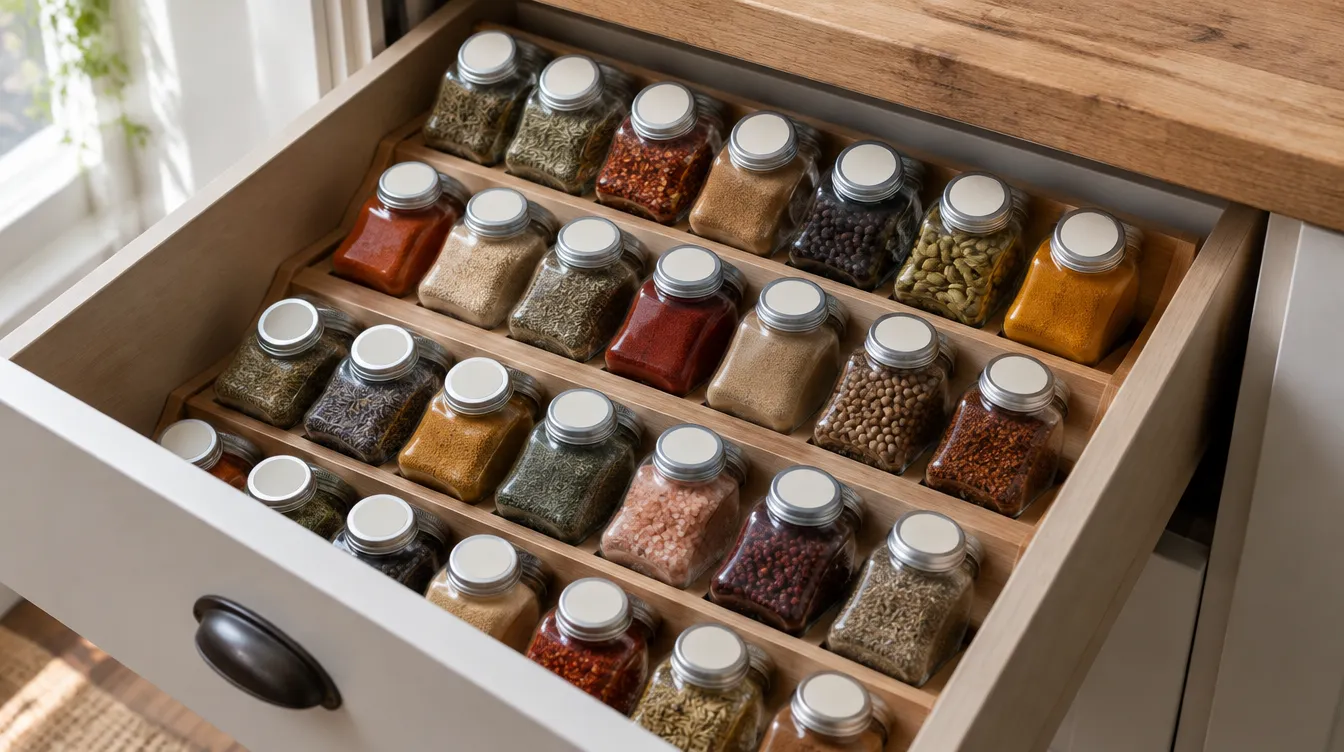
In a drawer
The insert
Expandable 4-tier spice drawer insert
Why it works: holds jars at an angle so you can read everything at once, and adjusts to most drawer widths. A drawer is cool and dark by default.
Less useful if: your only free drawer is right next to the oven.
Paid link
The labels
Pre-printed spice jar lid labels
Why it works: lid labels can be read from above in a drawer. Write the date you opened each one on the side.
Less useful if: you’d rather hand-write your own.
Paid link
For whole-spice cooks
The grinder
Cuisinart electric spice grinder
Why it works: grinding whole spices in small batches gives the freshest flavour, and a dedicated grinder avoids coffee-flavoured cumin.
Less useful if: you only reach for spices once in a while.
Paid link
Or skip buying anything: move the spices away from the hob today, bin the ones that fail the rub test, and buy smaller amounts next time. That alone fixes most bland cooking.
The same enemies, heat and moisture, decide how long bread lasts too. See why your bread goes stale or mouldy so fast.
Kitting out a small kitchen? Start with why your non-stick pan stopped being non-stick.